Psilocybin has not yet been shown to provide an effective treatment for opioid use disorder. The possibility of psychological benefit deserves investigation, but the immediate clinical priorities remain reducing overdose risk, sustaining engagement and providing treatments with established benefits.
Interest in psychedelic therapy is not a reason to stop buprenorphine or methadone. Medication changes require the prescribing clinician’s involvement. The published two-person psilocybin pilot involved adults already stabilised on buprenorphine/naloxone; it did not test psilocybin as a replacement.12
On this page
- Different treatment goals must remain distinct
- What the first buprenorphine pilot actually supports
- Population associations are mixed
- Reward learning is a hypothesis, not a substitute for care
- Psychological recovery alongside medication
- Overdose prevention cannot depend on subjective confidence
- The outcomes that would justify a clinical role
Different treatment goals must remain distinct
Opioid use disorder is not reducible to a desire for intoxication. A treatment plan may need to address compulsive use, craving, withdrawal, depression, trauma, pain and the social circumstances in which use occurs. Improvement in one domain does not demonstrate improvement in all the others. Someone can feel emotionally better while remaining at considerable risk from illicit opioid exposure.
Buprenorphine and methadone act at opioid receptors and can reduce withdrawal and craving. Naltrexone blocks opioid effects and is another medication option for appropriately selected patients. Clinical choice depends on assessment, treatment history and the person’s circumstances. Medication treatment is associated with lower overdose and overall mortality; detoxification without medication treatment is not recommended as a stand-alone response to opioid use disorder.2
Psilocybin research asks a different, still unresolved question: whether a psychedelic intervention can add useful psychological or behavioural effects to ongoing care. It cannot be assumed to suppress opioid withdrawal, maintain opioid tolerance or reverse respiratory depression. These are separate clinical functions, and none follows simply from an experience being emotionally powerful.
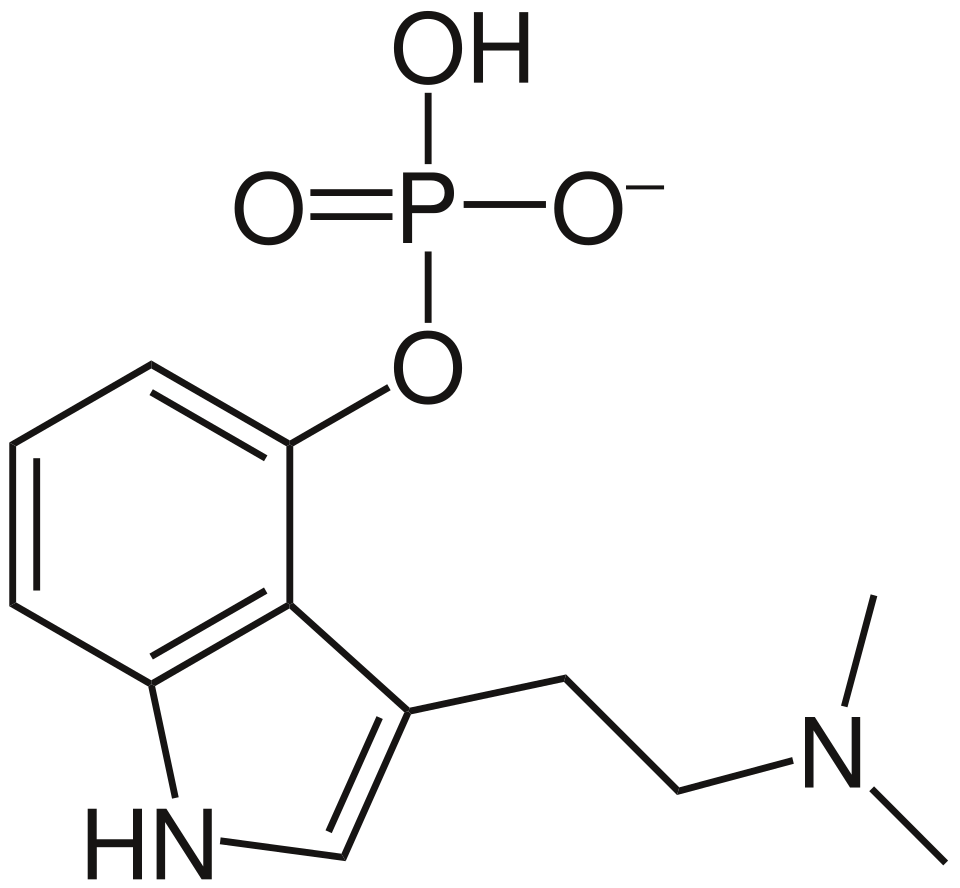

What the first buprenorphine pilot actually supports
A technical report described two adults stabilised on buprenorphine/naloxone for at least six months who completed two supported psilocybin sessions. No serious adverse events were reported, and the subjective psychedelic effects were broadly consistent with previous research. There were no significant changes from baseline in measures of opioid craving or withdrawal.1
This is limited feasibility information. Two participants cannot establish the safety of a drug combination, detect uncommon complications or determine treatment efficacy. They also cannot represent people in acute withdrawal or those with unstable opioid use. The unchanged craving and withdrawal measures are important, although such a small, already stabilised sample cannot provide a definitive negative efficacy test.1
The appropriate next step is controlled investigation with clearly specified goals. If participants are already doing well on medication, a trial might examine additional mood or functional benefits. If the aim is reduced illicit use, that outcome needs direct measurement. Moving between these objectives after seeing the results makes an intervention appear more established than it is.
Population associations are mixed
A 2022 analysis of 214,505 adults in the US National Survey on Drug Use and Health associated lifetime psilocybin use with lower odds of past-year opioid use disorder: adjusted odds ratio 0.70, with a 95% confidence interval of 0.60–0.83. This was not a trial of treatment, and it does not demonstrate that taking psilocybin reduces an individual’s risk by 30%. The sequence of exposures and illness, reasons for use and residual differences between groups limit causal interpretation.3
Later findings complicate a simple protective narrative. A 2026 analysis of 45,133 adults grouped lifetime psychedelic exposures into statistical factors. The factor combining LSD, psilocybin, MDMA and DMT was associated with higher opioid use disorder severity, whereas the mescaline/peyote factor showed a different relationship. Associations also varied with mental health impairment.4
The grouped factor cannot isolate a psilocybin-specific effect. Nor can this cross-sectional analysis show that psychedelics caused greater severity. Its outcome and modelling differ from the earlier study, so the findings are not a direct replication with an opposite result. Together, they show why population associations cannot settle a treatment decision.43
| Type of evidence | What it can contribute | What it cannot establish |
|---|---|---|
| Small treatment pilot | Practical feasibility and observed tolerability | Reliable efficacy or uncommon risks |
| Population survey | Patterns that generate research questions | The effect of prescribing a treatment |
| Animal experiment | Possible biological mechanisms | Human recovery, overdose prevention or clinical eligibility |
| Future controlled clinical trial | An estimate of benefit against a specified comparator | Automatic generalisation beyond its population and follow-up |
Reward learning is a hypothesis, not a substitute for care
A 2025 mouse experiment found that psilocybin reduced oxycodone-conditioned behaviour and withdrawal-related effects in males but not females, with a role for the serotonin 5-HT2A receptor. It also examined changes in neural circuits and gene regulation. This provides a mechanistic reason to study interactions between psychedelic effects and opioid-related learning.5
Conditioned behaviour in a laboratory animal is not the same as human opioid use disorder. It does not include the full burden of grief, unstable housing, contaminated drug supplies, chronic pain or access to treatment. The sex difference also cannot be converted into a rule about which human patients should receive treatment. Translation requires clinical evidence, including adequate representation and analysis of different patient groups.
Claims that psilocybin erases addiction, resets reward circuits or makes medication unnecessary go beyond these findings. A plausible mechanism can help design a study; it cannot replace the study’s clinical outcomes.
Psychological recovery alongside medication
A person receiving medication for opioid use disorder may still need care for depression, shame, trauma or social isolation. These needs should be taken seriously without treating medication as an incomplete or inauthentic form of recovery. NIDA’s clinical resources explicitly distinguish buprenorphine treatment from simply replacing one addictive drug with another; its purpose is to improve health and reduce harms.6
Any future psychedelic intervention should be evaluated in that continuing care context. A temporary increase in hope may be valuable, but it needs to be followed by evidence of improved daily life, treatment retention or reduced harmful use. Equally, a person should not be judged to have failed because a session is ordinary, uncomfortable or does not produce a compelling personal narrative.
Clinical discussion should make room for ambivalence and realistic goals. Psychological support after a psychedelic experience can address distress and meaning without endorsing further drug use. The harm reduction and integration model explicitly separates such support from recommending a psychedelic intervention.7
Overdose prevention cannot depend on subjective confidence
Naloxone reverses opioid overdose; psilocybin is not an overdose treatment. Continuing access to overdose prevention and addiction care remains relevant even when someone reports reduced craving or a major change in outlook. A suspected overdose requires emergency assistance.8
Stopping effective treatment to pursue an unproven intervention can interrupt the care that is already providing protection. CDC guidance warns that detoxification alone increases the risks of return to use, overdose and overdose death. Planning should therefore preserve clinical contact and medication review rather than make medication discontinuation a test of commitment.2
The outcomes that would justify a clinical role
Trials need to assess illicit opioid use, treatment retention, craving, quality of life and psychiatric symptoms separately. Safety reporting should include deterioration after the acute session, changes in other substance use and reasons for withdrawal from the study. Longer follow-up is necessary to distinguish a transient improvement from sustained recovery.
Research must also establish whether any benefit is additional to medication and appropriate psychological care. The clinically useful question is whether psilocybin can improve outcomes without weakening treatments that already help people remain alive and engaged. At present, that question remains open.
References
- Nicholas CR, Horton DM, Malicki J, et al. Psilocybin for Opioid Use Disorder in Two Adults Stabilized on Buprenorphine: A Technical Report on Study Modifications and Preliminary Findings. Psychedelic Med (New Rochelle). 2023;1:253–261. doi:10.1089/psymed.2023.0012.
- Centers for Disease Control and Prevention. Opioid Use Disorder: Treating. Clinical care guidance, 9 April 2024; accessed 11 October 2026.
- Jones G, Ricard JA, Lipson J, et al. Associations between classic psychedelics and opioid use disorder in a nationally-representative U.S. adult sample. Sci Rep. 2022;12:4099. doi:10.1038/s41598-022-08085-4.
- Ehmann S, Hager NM, Regier PS, et al. Lifetime psychedelic use and opioid use disorder severity in a National Survey: the roles of psychedelic type and mental health. Addict Behav. 2026;177:108652. doi:10.1016/j.addbeh.2026.108652.
- Jaster AM, Hadlock TM, Buzzi B, et al. Sex-specific role of the 5-HT2A receptor in psilocybin-induced extinction of opioid reward. Nat Commun. 2025;16:10206. doi:10.1038/s41467-025-64887-w.
- National Institute on Drug Abuse. Initiating Buprenorphine Treatment in the Emergency Department. Clinical resources; accessed 11 October 2026.
- Gorman I, Nielson EM, Molinar A, et al. Psychedelic Harm Reduction and Integration: A Transtheoretical Model for Clinical Practice. Front Psychol. 2021;12:645246. doi:10.3389/fpsyg.2021.645246.
- National Institute on Drug Abuse. Opioids. Drug topics, November 2024; accessed 11 October 2026.