Psilocybin is being investigated as a way of reducing the future burden of migraine and cluster headache. The clinical attraction is understandable: a treatment given infrequently might offer relief beyond its immediate effects. The present evidence, however, does not establish reliable prevention, and small controlled studies have produced negative as well as encouraging findings.
Headache prevention, relief of an attack already under way and relief of distress are different treatment goals. Psilocybin has preliminary preventive data; it is not an established replacement for acute migraine treatment, oxygen for cluster headache or an individual preventive treatment plan.
On this page
- Migraine and cluster headache require different assessments
- Why a serotonergic psychedelic is of interest
- Migraine: an early signal and a less decisive replication
- Cluster headache: the controlled result was negative
- Does relief require a psychedelic experience?
- Safety and continuing headache treatment
- What a clinically useful benefit would need to show
Migraine and cluster headache require different assessments
Migraine commonly causes disabling attacks with nausea, sensitivity to light and sound, and pain aggravated by ordinary activity. Untreated attacks in adults typically last 4–72 hours. Some people also experience aura. The diagnosis depends on the pattern of symptoms and the exclusion of a better explanation; the label does not mean that every severe headache is migraine.1
Cluster headache usually involves severe one-sided pain around the eye or temple, with features such as tearing, nasal symptoms or eyelid changes on the same side. Restlessness is characteristic. Attacks typically last 15–180 minutes and can recur several times a day. Episodic cluster headache has bouts separated by remission, whereas the chronic form has a different pattern of persistence. These distinctions matter when judging apparent improvement after any intervention.2
| Clinical question | Meaningful outcome | Potential source of confusion |
|---|---|---|
| Are future attacks less frequent? | Migraine days or cluster attacks recorded over a defined period | A naturally improving period can resemble a treatment effect. |
| Is an individual attack relieved? | Speed of relief, sustained relief and rescue treatment required | Fewer later attacks do not demonstrate an acute abortive action. |
| Has life become less restricted? | Sleep, work, daily activity and disability | Reduced distress and reduced headache frequency can occur separately. |
| Does benefit persist? | Repeated assessments after the initial follow-up | A good fortnight does not establish prevention across subsequent months. |
Why a serotonergic psychedelic is of interest
Psilocybin is converted to psilocin, which acts at several serotonin receptors, including the 5-HT2A receptor central to its psychedelic effects. Serotonergic pharmacology provides a reason to investigate headache outcomes, but receptor activity alone cannot establish an effective treatment. Different drugs acting within the serotonin system have different receptor profiles, physiological effects and clinical uses.34
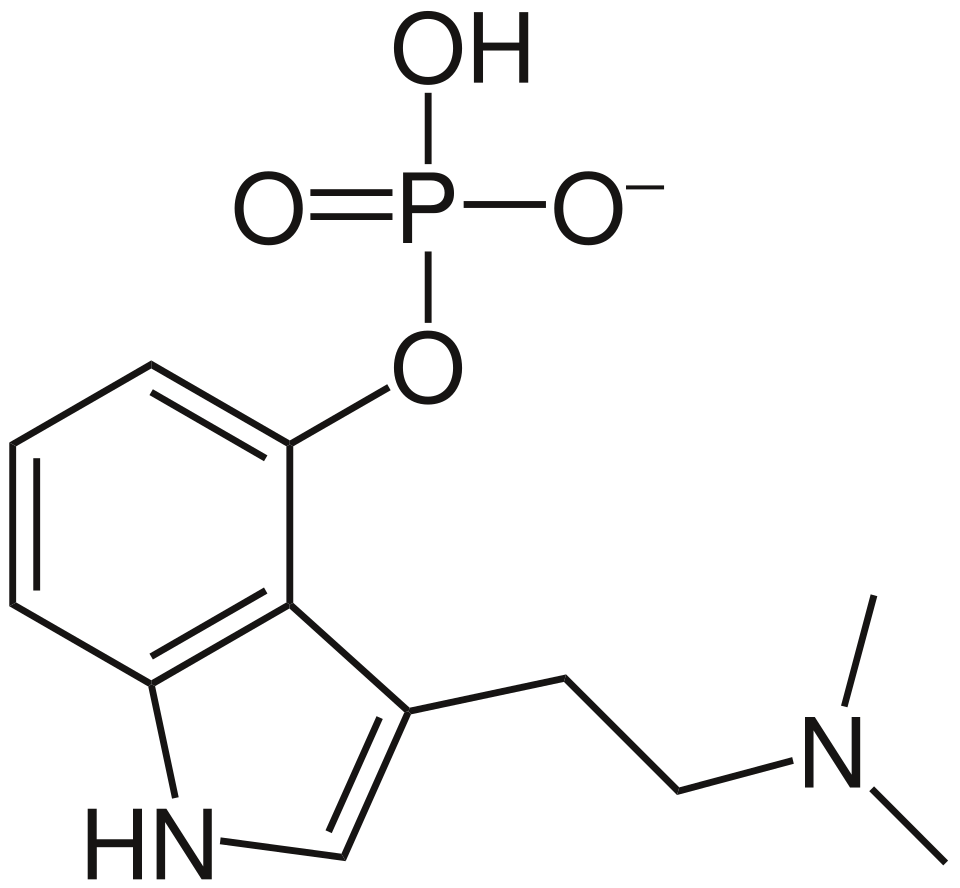

A proposed preventive effect also needs to explain a change that outlasts acute drug exposure. Possible alterations in pain processing and neural signalling remain hypotheses. A change on a brain scan, an emotionally important experience or a plausible biological pathway cannot substitute for a reduction in attacks demonstrated against an appropriate comparison group.
Migraine: an early signal and a less decisive replication
An exploratory study of ten adults reported fewer migraine days during the two weeks after psilocybin than after placebo. The average change was −1.65 migraine days per week after psilocybin and −0.15 after placebo. All participants received placebo first, however, so treatment order was not randomised. The small sample and fixed sequence limit the strength of the comparison. Several associated outcomes, including attack duration and sensory symptoms, did not show significant differences.5
A subsequent randomised study, published in 2026, included 18 participants assigned to two sessions containing an active placebo, one psilocybin exposure or two psilocybin exposures. The primary comparison of changes in weekly migraine days over the initial two weeks was not statistically significant between groups (p = 0.102). Across eight weeks, reductions approaching 50% occurred in all three groups. Repeating psilocybin did not establish an advantage. These results leave open a possible preventive effect but do not confirm that psilocybin accounted for the improvement.6
The practical implication is uncertainty about additional benefit. A large percentage improvement within a treatment group can look persuasive while the comparison group improves as well. For a patient deciding whether to accept an intensive and potentially distressing intervention, the relevant question is how much benefit it adds to the care, attention and symptom fluctuation that would otherwise occur.
Cluster headache: the controlled result was negative
The first exploratory randomised cluster-headache study allocated 16 participants, with 14 included in the final analysis. Over the initial three-week outcome period, weekly attacks changed by approximately −3.2 after psilocybin and +0.03 after placebo. The difference was not statistically significant (p = 0.251), and uncertainty around the estimates was wide. Apparent differences between chronic and episodic cases were exploratory. The trial supports further investigation; it does not demonstrate established efficacy for either subtype.7
A later extension involved ten returning participants who all received psilocybin. Mean weekly attacks fell from 18.4 to 9.8 over the subsequent three weeks. Although the extension retained blinding arrangements, there was no contemporaneous placebo group receiving a different intervention. Selection of returning participants, fluctuation in illness and regression towards an individual’s usual symptom level therefore remain possible explanations for some of the change.8
A separate open-label investigation in ten people with chronic cluster headache reported a mean 31% reduction in attack frequency and an association with hypothalamic functional connectivity. This is useful exploratory information about a possible mechanism. With no control group, the study cannot establish either treatment efficacy or a causal link between the imaging change and headache improvement.9
Small samples can miss a real benefit, but that possibility does not convert an unsuccessful comparison into a positive trial. The migraine and cluster-headache findings justify better studies while leaving the size, reliability and duration of any added benefit unresolved.
Does relief require a psychedelic experience?
The early migraine study did not find a correlation between the intensity of acute subjective effects and later headache improvement. Similar observations have appeared in the subsequent migraine and cluster-headache work. Small studies have limited power to detect such relationships, so this is not proof that subjective effects never matter. It nevertheless provides no clinical basis for seeking a more intense experience in order to obtain greater headache relief.567
Claims that a frightening session is necessary for neurological recovery are particularly unhelpful. Headache outcomes need neurological assessment regardless of how a session feels. Psychological support can help someone cope with altered perception and anxiety without making the intensity of that experience a therapeutic target.
Safety and continuing headache treatment
Psilocybin itself can produce headache, nausea, anxiety and transient increases in blood pressure. A drug investigated for preventing headaches can therefore also cause a short-term headache as an adverse effect. Broader clinical safety findings come largely from selected participants receiving screening and supervision; they do not establish safety for every person with recurrent headache or cardiovascular disease.1011
Medication review is particularly important where several acute and preventive drugs are being used. Interaction evidence is incomplete, and an absence of a documented interaction is not a demonstration of safety. Prescribed treatments should not be stopped, substituted or combined with psychedelics on the basis of a general article. A supervised research protocol includes its own eligibility rules and a plan for deterioration.1213
Established care remains important. NICE recommends oxygen and/or a suitable injected or nasal triptan for acute cluster headache, with specialist advice and monitoring when verapamil is considered for prevention. Migraine care includes appropriate acute treatment and preventive options selected according to attack burden, other conditions and previous response. A headache diary can support assessment of patterns and treatment effects.14
A sudden severe headache, a headache with new neurological symptoms, impaired consciousness, or fever and marked deterioration requires urgent medical assessment. An existing migraine or cluster-headache diagnosis should not be used to dismiss a substantially different presentation.14
What a clinically useful benefit would need to show
A useful preventive treatment should make daily life more predictable, reduce the burden of attacks and preserve access to effective rescue care. Future comparisons need adequate numbers, credible masking, clearly defined headache subtypes and follow-up long enough to distinguish treatment effects from a resolving bout. Disability, medication use and adverse effects belong alongside frequency counts.
The present position is a plausible therapeutic possibility with uncertain added benefit. For migraine, the later controlled findings temper the initial signal. For cluster headache, improvement in uncontrolled follow-up does not overturn the negative primary controlled comparison. Psilocybin remains a subject for carefully monitored clinical research while headache diagnosis and established treatment continue.
References
- International Headache Society. ICHD-3: Migraine without aura. International Classification of Headache Disorders, third edition; accessed 11 October 2026.
- International Headache Society. ICHD-3: Cluster headache. International Classification of Headache Disorders, third edition; accessed 11 October 2026.
- Nichols DE. Psychedelics. Pharmacol Rev. 2016;68:264–355. doi:10.1124/pr.115.011478.
- Otto ME, van der Heijden KV, Schoones JW, et al. Clinical Pharmacokinetics of Psilocin After Psilocybin Administration: A Systematic Review and Post-Hoc Analysis. Clin Pharmacokinet. 2025;64:53-66. doi:10.1007/s40262-024-01454-4.
- Schindler EAD, Sewell RA, Gottschalk CH, et al. Exploratory Controlled Study of the Migraine-Suppressing Effects of Psilocybin. Neurotherapeutics. 2021;18:534–543. doi:10.1007/s13311-020-00962-y.
- Schindler EAD, Gottschalk CH, Pittman BP, D’Souza DC. Comparing single- and repeat-dose psilocybin with active placebo for migraine prevention in an exploratory randomized controlled clinical trial. Headache. 2026;66:885–895. doi:10.1111/head.70024.
- Schindler EAD, Sewell RA, Gottschalk CH, et al. Exploratory investigation of a patient-informed low-dose psilocybin pulse regimen in the suppression of cluster headache: Results from a randomized, double-blind, placebo-controlled trial. Headache. 2022;62:1383–1394. doi:10.1111/head.14420.
- Schindler EAD, Sewell RA, Gottschalk CH, et al. Psilocybin pulse regimen reduces cluster headache attack frequency in the blinded extension phase of a randomized controlled trial. J Neurol Sci. 2024;460:122993. doi:10.1016/j.jns.2024.122993.
- Madsen MK, Petersen AS, Stenbæk DS, et al. CCH attack frequency reduction after psilocybin correlates with hypothalamic functional connectivity. Headache. 2024;64:55–67. doi:10.1111/head.14656.
- Yerubandi A, et al. Acute Adverse Effects of Therapeutic Doses of Psilocybin: A Systematic Review and Meta-Analysis. JAMA Netw Open. 2024;7:e245960. doi:10.1001/jamanetworkopen.2024.5960.
- Nahlawi A, Ptaszek LM, Ruskin JN. Cardiovascular effects and safety of classic psychedelics. Nat Cardiovasc Res. 2025;4:131–144. doi:10.1038/s44161-025-00608-2.
- Halman A, et al. Drug–drug interactions involving classic psychedelics: A systematic review. J Psychopharmacol. 2024. doi:10.1177/02698811231211219.
- Johnson MW, Richards WA, Griffiths RR. Human Hallucinogen Research: Guidelines for Safety. J Psychopharmacol. 2008;22:603–620. doi:10.1177/0269881108093587.
- National Institute for Health and Care Excellence. Headaches in over 12s: diagnosis and management (CG150). Recommendations; accessed 11 October 2026.