Prescribed medicines can affect the response to psilocybin, but an interaction may concern several different things: the intensity of the experience, the likelihood of clinical benefit, physical toxicity or the consequences of changing an existing treatment. These questions require separate assessment. Neither the assumption that all antidepressants block psilocybin nor the assumption that every combination is safe is supported by the available evidence.
A trial’s medication exclusion is not an instruction to stop treatment. Prescribed medicines should not be stopped, reduced or skipped to prepare for psilocybin without the prescriber’s involvement. A weak subjective response is also not a reason to increase psychedelic exposure or add another drug.
On this page
- What an interaction can mean
- SSRIs do not have one uniform effect
- Why surveys sometimes suggest weaker effects
- Does stopping an antidepressant improve the outcome?
- Withdrawal is a clinical event, not an administrative interval
- Lithium requires particular caution
- Serotonin toxicity and combinations of medicines
- A medication review needs the complete picture
- What better evidence would resolve
What an interaction can mean
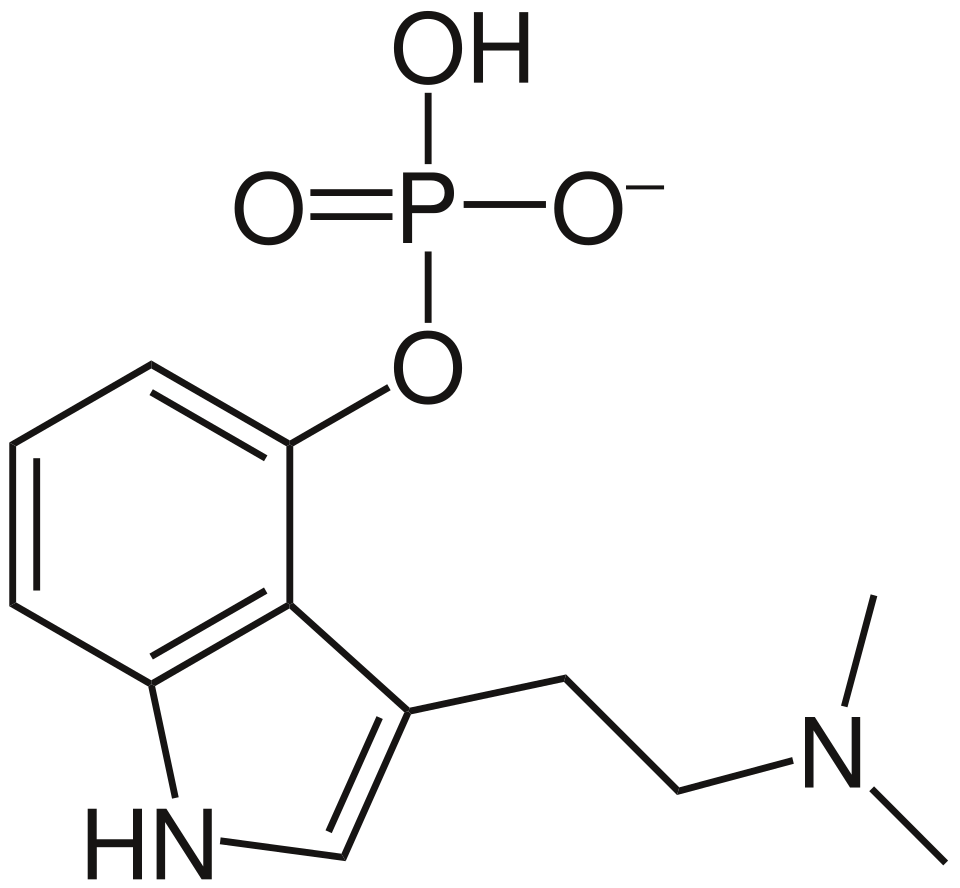
Psilocybin is converted to psilocin, which acts at serotonin receptors, particularly the 5-HT2A receptor. Medicines may alter the subjective response through their effects on receptors or neurotransmission, without necessarily producing a predictable change in psilocin concentrations. In a controlled escitalopram study, for example, some subjective and physiological responses changed while psilocin pharmacokinetics did not.1
Clinical benefit is a further question. A less intense experience does not establish that treatment cannot work, and a stronger experience does not demonstrate greater antidepressant benefit. Safety cannot be inferred from either observation. The relevant assessment includes the particular medicine, duration of use, other substances, the underlying illness and the consequences of interrupting treatment.

SSRIs do not have one uniform effect
A double-blind crossover study examined psilocybin after two weeks of escitalopram or placebo pretreatment in healthy adults; 23 participants completed the study. Escitalopram did not meaningfully reduce positive mood effects, but reduced anxiety, unpleasant drug effects and some cardiovascular responses. It did not alter measured psilocin pharmacokinetics.1
This provides controlled evidence for one medicine under specific conditions. Two weeks of exposure in healthy volunteers cannot answer every question about years of antidepressant treatment in someone with depression, multiple medicines or physical illness. The study also assessed acute responses rather than long-term antidepressant effectiveness.
An exploratory study addressed the clinical question more directly by administering psilocybin with psychological support to 19 people with treatment-resistant depression who continued an SSRI. At three weeks, mean depression scores had decreased by 14.9 points on the Montgomery–Åsberg Depression Rating Scale. Eight participants met response criteria and eight met remission criteria. Twelve reported treatment-emergent adverse events, mostly mild; no serious treatment-emergent events were reported.2
The study was open-label and had no comparator. It shows that improvement can occur while an SSRI is continued, but does not establish the contribution of psilocybin, prove equivalence to treatment without an SSRI or exclude uncommon interaction risks. Longer, controlled evaluation remains necessary.
Why surveys sometimes suggest weaker effects
A retrospective online survey found reports of weaker-than-expected psilocybin mushroom effects during SSRI or SNRI use, with possible persistence after discontinuation. These observations raise useful questions about the influence of longer medication exposure. However, respondents selected themselves, recalled their experiences and used mushrooms with uncertain potency. Such a survey cannot determine the response to a standardised clinical preparation or prescribe a reliable medication-free interval.3
The survey and the controlled escitalopram experiment therefore answer different questions. Differences in participants, medicine, treatment duration, exposure and outcome measures may account for some apparent disagreement. It would be misleading to convert either finding into a universal rule that antidepressants must be stopped or that they never alter the experience.
Does stopping an antidepressant improve the outcome?
Post hoc analyses have produced conflicting findings. An analysis of a psilocybin-versus-escitalopram depression trial found a smaller psilocybin treatment effect among participants who had discontinued an SSRI or SNRI before entry than among those already unmedicated. The authors considered withdrawal and other differences between the groups as possible influences.4
A separate analysis using data from a 233-person treatment-resistant depression trial did not find that prior antidepressant discontinuation compromised the subjective psychedelic experience or antidepressant outcome. It also did not find worsening depression during the discontinuation period on the measures examined.5
Neither comparison randomly assigned otherwise similar people to continue or stop an antidepressant. Medication history may reflect illness severity, prior treatment response and other differences. These analyses therefore cannot establish that withdrawal causes poorer outcomes, or that stopping is harmless for a particular person. They also should not be confused with a direct trial comparing continuation against discontinuation.
Withdrawal is a clinical event, not an administrative interval
NICE advises discussing discontinuation with the prescriber and usually reducing antidepressants in stages. Withdrawal may involve dizziness, altered sensations, anxiety, low mood or sleep disturbance, and can sometimes be prolonged or severe. Monitoring needs to consider both withdrawal and the return of the original condition.6
A fixed preparation schedule cannot take precedence over the person’s response. The time needed depends on the medication, duration of treatment, previous withdrawal experiences and clinical circumstances. A period without medication also does not establish that receptor adaptations have reversed or that relapse risk has passed.
When symptoms worsen during preparation, clinicians need a timeline: what changed, when it changed and how the symptoms relate to dose reductions or missed doses. Labelling all deterioration as relapse can miss withdrawal; labelling it all as withdrawal can miss recurrent illness. The treatment plan needs room for reassessment rather than pressure to remain eligible for a psychedelic session.
Lithium requires particular caution
An analysis of online reports identified a concerning association between lithium and seizures during use of classic psychedelics. The data were drawn from selected experience reports involving different psychedelics, not a prospective psilocybin trial. They cannot estimate an individual’s risk, but they provide a clinically important warning. The absence of comparable reports for another mood stabiliser does not establish that combination as safe.7
Stopping lithium to avoid an interaction creates a separate risk. Lithium may be maintaining stability in bipolar disorder or contributing to depression treatment; changes need specialist involvement.8 The underlying diagnosis also matters because an apparent lift in mood can coexist with emerging activation. The collection’s article on bipolar depression addresses that distinction.
Serotonin toxicity and combinations of medicines
Serotonin toxicity is a potentially serious syndrome involving altered mental state, autonomic disturbance and neuromuscular overactivity. Concerning features can include confusion or agitation accompanied by marked sweating, temperature or pulse changes, muscle rigidity or repetitive involuntary jerking. These symptoms require urgent medical assessment rather than an assumption that they are an ordinary psychedelic reaction.9
A published case described serotonin toxicity after trazodone was added in someone taking a high-dose antidepressant regimen and repeatedly using unregulated psilocybin. Multiple medicines and uncertain psychedelic exposure prevent isolation of psilocybin’s contribution. The case is a warning about complex combinations, not a measurement of the risk from a supervised SSRI–psilocybin protocol.10
Small studies that report no such event cannot prove its impossibility. Equally, one complex case does not show that every SSRI combination produces toxicity. A responsible interpretation preserves both the adverse signal and the limits of causal attribution.
A medication review needs the complete picture
| Clinical question | Information needed |
|---|---|
| What is being taken? | All prescribed, non-prescribed and as-needed medicines, supplements and recreational substances. |
| Why is it prescribed? | The condition being treated, previous response and the consequences of losing stability. |
| What recently changed? | New prescriptions, dose changes, missed doses, withdrawal symptoms and altered substance use. |
| What evidence applies? | Whether the specific combination has controlled human data, only case reports or little relevant information. |
| Who will follow up? | A coordinated plan for adverse effects, deterioration and continuing treatment. |
Evidence about an SSRI does not automatically apply to an SNRI, monoamine oxidase inhibitor, stimulant, antipsychotic or a combination of several agents. Pharmacological differences and the underlying diagnoses require specific review. Unknown compatibility should remain recorded as uncertainty rather than being converted into a reassuring “no interaction” label.
Medication review should occur early enough to allow communication with the prescriber and, when needed, a pharmacist or specialist. Patients should be able to disclose actual use without fear of a punitive response. Incomplete disclosure makes both interaction assessment and interpretation of later symptoms less reliable.
What better evidence would resolve
Future studies need to compare continuation and discontinuation directly, account for treatment duration and measure withdrawal separately from recurrent illness. They also need enough participants and follow-up to assess uncommon harms, sustained benefit and the practical burden of changing an otherwise useful medicine.
The available evidence supports an individual clinical assessment rather than a universal washout rule. The purpose of medication planning is to preserve health and evaluate a treatment’s benefit–risk balance. Maximising the intensity of an altered state is not an adequate treatment goal.
References
- Becker AM, Holze F, Grandinetti T, et al. Acute Effects of Psilocybin After Escitalopram or Placebo Pretreatment in a Randomized, Double-Blind, Placebo-Controlled, Crossover Study in Healthy Subjects. Clin Pharmacol Ther. 2022;111:886-895. doi:10.1002/cpt.2487.
- Goodwin GM, Croal M, Feifel D, et al. Psilocybin for treatment resistant depression in patients taking a concomitant SSRI medication. Neuropsychopharmacology. 2023;48:1492-1499. doi:10.1038/s41386-023-01648-7.
- Gukasyan N, Griffiths RR, Yaden DB, et al. Attenuation of psilocybin mushroom effects during and after SSRI/SNRI antidepressant use. J Psychopharmacol. 2023;37:707–716. doi:10.1177/02698811231179910.
- Erritzoe D, Barba T, Spriggs MJ, et al. Effects of discontinuation of serotonergic antidepressants prior to psilocybin therapy versus escitalopram for major depression. J Psychopharmacol. 2024;38:458-470. doi:10.1177/02698811241237870.
- Marwood L, Croal M, Mistry S, et al. The impact of antidepressant discontinuation prior to treatment with psilocybin for treatment-resistant depression. J Psychiatr Res. 2024;180:198–203. doi:10.1016/j.jpsychires.2024.10.009.
- National Institute for Health and Care Excellence. Depression in adults: treatment and management (NG222). Recommendations; accessed 11 October 2026.
- Nayak SM, Gukasyan N, Barrett FS, et al. Classic Psychedelic Coadministration with Lithium, but Not Lamotrigine, is Associated with Seizures: An Analysis of Online Psychedelic Experience Reports. Pharmacopsychiatry. 2021;54:240–245. doi:10.1055/a-1524-2794.
- National Institute for Health and Care Excellence. Bipolar disorder: assessment and management (CG185). Recommendations; accessed 11 October 2026.
- NHS Specialist Pharmacy Service. Monitoring a person during and after antidepressant switching. Professional guidance; accessed 11 October 2026.
- Baweja R, Amarnani AD, Free MF. Psilocybin and the Development of Serotonin Toxicity. Prim Care Companion CNS Disord. 2024;26:23cr03648.