Psilocybin microdosing attracts interest because of the possibility of improved mood or concentration without a prolonged psychedelic experience. The appeal is particularly strong for people who are struggling but cannot take time away from ordinary responsibilities. That appeal needs to be distinguished from demonstrated clinical benefit.
Repeated small doses of psilocybin have not consistently improved mood, cognition or wellbeing beyond placebo in controlled studies. Some findings deserve further attention, including a limited signal on one aspect of creative thinking and preliminary observations in palliative care. They do not establish microdosing as a general antidepressant, a reliable productivity aid or a substitute for a supported course of psychedelic therapy.1234
On this page
- What does microdosing mean?
- Why a plausible mechanism is not enough
- What controlled studies have found
- Creativity is a specific and mixed finding
- Why observational reports often look more favourable
- Expectation and the difficulty of blinding
- Depression and other clinical conditions
- Repeated exposure and the limits of safety knowledge
- What stronger clinical evidence would require
What does microdosing mean?
Microdosing generally means repeated use of a psychedelic in amounts intended to produce little or no overt alteration of consciousness. There is no single, universally validated medical regimen behind the term. Studies differ in the material used, the amount of active compound, the timing of administration and the people enrolled. “Subperceptual” describes an intention or an observed response; it does not guarantee that nobody will notice a drug effect.51
This variability matters when mushrooms or truffles are used. A weight of biological material is not the same as a known quantity of purified psilocybin. Differences in potency and preparation complicate both the comparison of studies and the interpretation of personal accounts. Results obtained with one product or protocol cannot automatically be applied to every product marketed under the same label.1
Microdosing also needs to be distinguished from the lower-dose comparator conditions used in some psychedelic trials. A small amount administered once as a control is not necessarily a tested long-term treatment. Similarly, a supported high-dose session and repeated low doses involve different exposures, experiences and clinical arrangements. Similarity of the molecule does not establish equivalence of the treatment.

Why a plausible mechanism is not enough
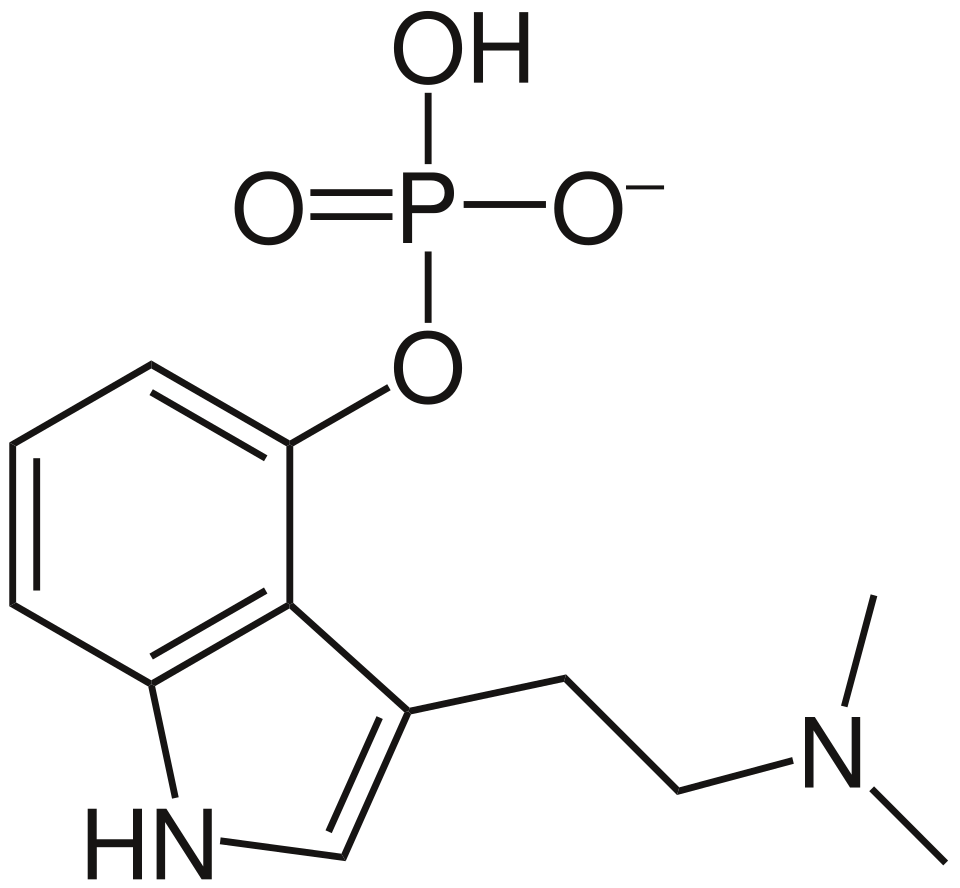
Psilocybin is converted into psilocin, which acts at serotonin receptors. Effects associated with the 5-HT2A receptor are central to the characteristic psychedelic state. Laboratory and animal work also examines changes in neural plasticity, signalling and synaptic structure. These observations provide reasons to investigate clinical possibilities; they do not identify a proven microdosing treatment for depression, anxiety or impaired attention.67
A finding about neural plasticity does not by itself establish healing or clinical recovery. Greater capacity for change does not specify the direction of change, the circumstances needed to support it or the clinical outcome. A cellular effect can be real without producing a useful improvement in a patient’s life. To establish therapeutic value, outcomes must be measured in the relevant people over an appropriate period.
The same applies to claims that a small dose retains every therapeutic property of a larger dose while removing every disadvantage. That is a hypothesis to test. Pharmacology may vary with exposure, while the psychological processes associated with a substantial altered state may be absent, reduced or qualitatively different.
What controlled studies have found
In a double-blind study of 34 people beginning psilocybin mushroom microdosing, the active condition produced noticeable subjective effects and changes in brain electrical activity. It did not provide convincing improvement in wellbeing, creativity or general cognitive performance; a few measures instead shifted towards poorer performance. A detectable effect on the nervous system was therefore not evidence of the benefits commonly advertised.1
A separate preregistered study found no advantage over placebo for emotion processing or symptoms of anxiety and depression. Symptoms improved during the first study period regardless of condition, illustrating why an improvement from baseline is insufficient to identify a drug effect.5
Two further double-blind, placebo-controlled longitudinal trials, published in the 2026 volume of Neuropharmacology, examined cognitive control, memory, social cognition and subjective wellbeing. Initial signals in some measures did not remain significant after correction for multiple comparisons. Participants remained effectively blinded, and there was no reliable overall cognitive or emotional advantage over placebo.2
These results weigh against broad claims that microdosing reliably improves everyday mental performance. They do not prove that no individual can ever benefit or that every possible clinical application has been excluded. The appropriate conclusion is narrower: the commonly claimed general benefits have not been consistently demonstrated under controlled conditions.
Creativity is a specific and mixed finding
Creativity is not one measurable faculty. Generating several unusual possibilities is different from finding one correct solution, and laboratory tasks capture only aspects of either process. Feeling more creative is also different from producing work that is independently judged to be more original or useful.
An analysis of three double-blind longitudinal trials reported a small improvement in the quality or originality of divergent ideas, while finding no improvement in convergent thinking. The combined analysis therefore offers a limited positive signal, rather than a general demonstration of enhanced creativity.3 This limited positive finding means that the controlled literature should not be described as uniformly negative.
Its practical significance remains uncertain. A subtle average difference on an idea-generation task does not establish improved professional performance, better decision-making or treatment of a medical disorder. Those claims would require their own outcomes and appropriately designed studies. The attraction of the word “creativity” should not make the evidence carry more than it can support.
Why observational reports often look more favourable
A prospective observational study followed 953 psilocybin microdosers and 180 non-microdosing comparators for approximately one month. It found greater improvements in mood and mental health among the microdosers. These are worthwhile observations, but participants were not randomly assigned to microdosing and the comparison did not conceal who was taking it.8
People choosing a new practice may also change sleep, exercise, alcohol use, social contact or attention to their wellbeing. They may begin when symptoms are unusually severe, followed by a natural movement back towards their usual level. Those who expect benefit may notice and report changes differently from people who did not choose the intervention. None of this means that their improvement is imaginary. It means that its cause is uncertain.
Such observations can identify questions and outcomes worth testing. A larger observational sample does not override a controlled trial simply because its results are more favourable. Sample size cannot, by itself, remove systematic differences between the people being compared.
Expectation and the difficulty of blinding
A self-blinding citizen-science study, completed by 191 participants using their own psychedelic materials, found psychological improvement in both microdose and placebo groups without significant between-group differences on the main longer-term outcomes. Small acute differences were closely connected with participants’ beliefs about what they had taken. Because this was a self-organised study involving different psychedelics, it should not be described as a conventional trial of pharmaceutical psilocybin.9
These findings make expectation an important explanation, but “it is all placebo” is too absolute. Blinding can fail because a drug has genuine effects. Analyses based on guessed allocation can themselves be difficult to interpret. Conversely, a noticeable sensation may reveal allocation and increase the expectation of benefit without improving the target condition. Each possibility requires consideration when interpreting the findings.
Placebo-associated improvement can involve real changes in experience and behaviour. The clinical question is whether adding the active drug produces enough further benefit to justify its risks and demands. Respecting a person’s account and requiring an adequate comparison are compatible positions.
| Finding | Reasonable interpretation | Unjustified extension |
|---|---|---|
| Mood improves after microdosing begins | An improvement occurred and deserves attention. | The drug necessarily caused it. |
| Brain activity changes | The exposure has a measurable biological effect. | The change is clinically beneficial. |
| One creativity measure improves | A particular cognitive effect may merit replication. | General productivity or mental health will improve. |
| A short study reports few serious problems | The observed exposure appeared tolerable in that sample. | Repeated use over months or years is established as safe. |
Depression and other clinical conditions
The distinction between healthy volunteers and patients with a diagnosed disorder is essential. A negative performance study in relatively healthy people does not definitively exclude an antidepressant effect in a clinical population. Equally, participants reporting low mood in a community survey do not automatically represent patients with major depressive disorder, bipolar depression or another condition requiring specific assessment.
A published phase II protocol describes a placebo-controlled trial of psilocybin microdosing for major depressive disorder. A protocol establishes what investigators intend to test; it does not supply treatment outcomes.10 The existence of that study is not evidence that the treatment works.
The 2026 PSYCHED-PAL study offers preliminary clinical observations in advanced incurable illness: 17 participants began repeated low-dose treatment and 13 completed it, with several reporting improvement in distress. The absence of a placebo group and the small number of completers prevent a reliable estimate of drug-specific benefit.4 This is a different population and treatment context from people seeking an everyday concentration aid.
Diagnosis-specific efficacy remains to be established adequately. Evidence for high-dose, supported psilocybin treatment should not be borrowed to advertise repeated low doses for depression, attention difficulties or general emotional resilience.
Repeated exposure and the limits of safety knowledge
A low dose may reduce some acute effects, but does not establish an absence of risk. A person may still notice anxiety, bodily discomfort or altered perception. Small trials with short follow-up cannot reliably detect uncommon problems, and acute tolerability cannot settle the safety of repeated use over long periods.12
One unresolved cardiovascular concern involves activity at the serotonin 5-HT2B receptor. Sustained stimulation of this receptor by certain other drugs has been associated with heart-valve disease. The relevance of repeated psychedelic exposure remains uncertain: this is a mechanistic concern that calls for investigation, not proof that psilocybin microdosing causes valve damage in humans. Neither reassurance nor alarm should outrun the available evidence.11
Interactions with prescribed or non-prescribed drugs are another area of incomplete knowledge. The fact that someone intends to take a small dose does not establish that every combination is safe. Changes to antidepressants or other established treatment should be discussed with the prescribing clinician; stopping them to facilitate microdosing introduces a separate risk that must be considered.12
A personal impression of being “unaffected” does not establish fitness for driving or another safety-critical task. Subjective confidence is an inadequate substitute for demonstrated unimpaired performance. The term microdose does not provide that demonstration.
What stronger clinical evidence would require
Stronger evidence requires replicated, adequately controlled trials in clearly defined patient groups, using characterised material and outcomes that matter to patients. A primary endpoint should be specified before the results are known. Improvements should be large enough to matter clinically, with attention to functioning, persistence after treatment and the experience of people who discontinue.
Safety follow-up needs to match the proposed pattern of use. A treatment promoted for repeated administration should be evaluated as repeated administration, including relevant medication combinations and cardiovascular questions. Comparisons with appropriate established care would help determine whether it offers a practical advantage, rather than merely whether a statistical signal can be found.
Psilocybin microdosing remains an unresolved clinical approach with substantial public enthusiasm, inconsistent controlled benefits and important gaps in long-term safety knowledge. That assessment leaves room for useful future applications while keeping present claims proportionate to what has actually been demonstrated.
For an explanation of receptors, plasticity and the limits of mechanistic claims, see:
References
- Cavanna F, Muller S, de la Fuente LA, et al. Microdosing with psilocybin mushrooms: a double-blind placebo-controlled study. Transl Psychiatry. 2022;12:307. doi:10.1038/s41398-022-02039-0.
- Prochazkova L, Marschall J, Lippelt DP, et al. Cognitive and subjective effects of psilocybin microdosing: Results from two double-blind placebo-controlled longitudinal trials. Neuropharmacology. 2026;283:110722. doi:10.1016/j.neuropharm.2025.110722.
- Prochazkova L, Marschall J, van Elk M, et al. Microdosing psilocybin and its effect on creativity: Lessons learned from three double-blind placebo controlled longitudinal trials. Neuropharmacology. 2026;284:110732. doi:10.1016/j.neuropharm.2025.110732.
- Downar J, Lapenskie J, Anderson K, et al. PSilocybin for psYCHological and existential distress in PALliative care (PSYCHED-PAL): A single arm unblinded clinical trial. Palliat Med. 2026;40:514-523. doi:10.1177/02692163261416269.
- Marschall J, Fejer G, Lempe P, et al. Psilocybin microdosing does not affect emotion-related symptoms and processing: A preregistered field and lab-based study. J Psychopharmacol. 2022;36:97-113. doi:10.1177/02698811211050556.
- Nichols DE. Psychedelics. Pharmacol Rev. 2016;68:264–355. doi:10.1124/pr.115.011478.
- de Vos CMH, Mason NL, Kuypers KPC. Psychedelics and Neuroplasticity: A Systematic Review Unraveling the Biological Underpinnings of Psychedelics. Front Psychiatry. 2021;12:724606. doi:10.3389/fpsyt.2021.724606.
- Rootman JM, Kiraga M, Kryskow P, et al. Psilocybin microdosers demonstrate greater observed improvements in mood and mental health at one month relative to non-microdosing controls. Sci Rep. 2022;12:11091. doi:10.1038/s41598-022-14512-3.
- Szigeti B, Kartner L, Blemings A, et al. Self-blinding citizen science to explore psychedelic microdosing. Elife. 2021;10:e62878. doi:10.7554/elife.62878.
- Beidas Z, Ragnhildstveit A, Blackman A, et al. Microdosing psilocybin for major depressive disorder: study protocol for a phase II double-blind placebo-controlled randomised partial crossover trial. BJPsych Open. 2026;12:e65. doi:10.1192/bjo.2025.10968.
- Nahlawi A, Ptaszek LM, Ruskin JN. Cardiovascular effects and safety of classic psychedelics. Nat Cardiovasc Res. 2025;4:131–144. doi:10.1038/s44161-025-00608-2.
- Halman A, et al. Drug–drug interactions involving classic psychedelics: A systematic review. J Psychopharmacol. 2024. doi:10.1177/02698811231211219.