Psilocybin-assisted treatment has produced encouraging smoking-cessation results, including a positive randomised comparison with nicotine patches. Its potential lies in helping people change their relationship with smoking while receiving structured behavioural treatment. Lasting abstinence, withdrawal management and prevention of relapse remain the clinical goals.
Psilocybin is an investigational approach to tobacco dependence. A promising result within an intensive treatment programme does not establish that an unsupervised psychedelic experience will help someone stop smoking. Established cessation treatments remain relevant, including after several unsuccessful attempts.
On this page
- Why tobacco dependence persists
- What psilocybin might contribute
- What the clinical findings show
- Abstinence, reduction and relapse are different outcomes
- The place of established smoking-cessation care
- Screening and safety
- Turning a treatment experience into sustained change
- What still needs to be established
Why tobacco dependence persists
Nicotine dependence involves both the pharmacological effects of nicotine and learned associations between smoking and everyday life. Withdrawal can produce irritability, restlessness, difficulty concentrating and craving. A cigarette may temporarily relieve that discomfort, reinforcing further smoking. Separately, familiar settings, social routines and emotional states can become powerful cues, even after the most acute withdrawal has passed.1
This distinction matters when considering a treatment intended to alter perception, emotion or motivation. A change in how smoking is understood may be valuable, but the person still returns to the environments in which the habit developed. Work breaks, relationships, alcohol use, stress and the ready availability of cigarettes can continue to shape behaviour. Clinical success therefore requires more than a compelling reason to quit.
Repeated attempts do not demonstrate a lack of commitment. They can reveal which circumstances need a different treatment plan: inadequately controlled withdrawal, strong situational cues, inconsistent support or a coexisting mental health problem. The appropriate question is what would make the next attempt more sustainable.
What psilocybin might contribute
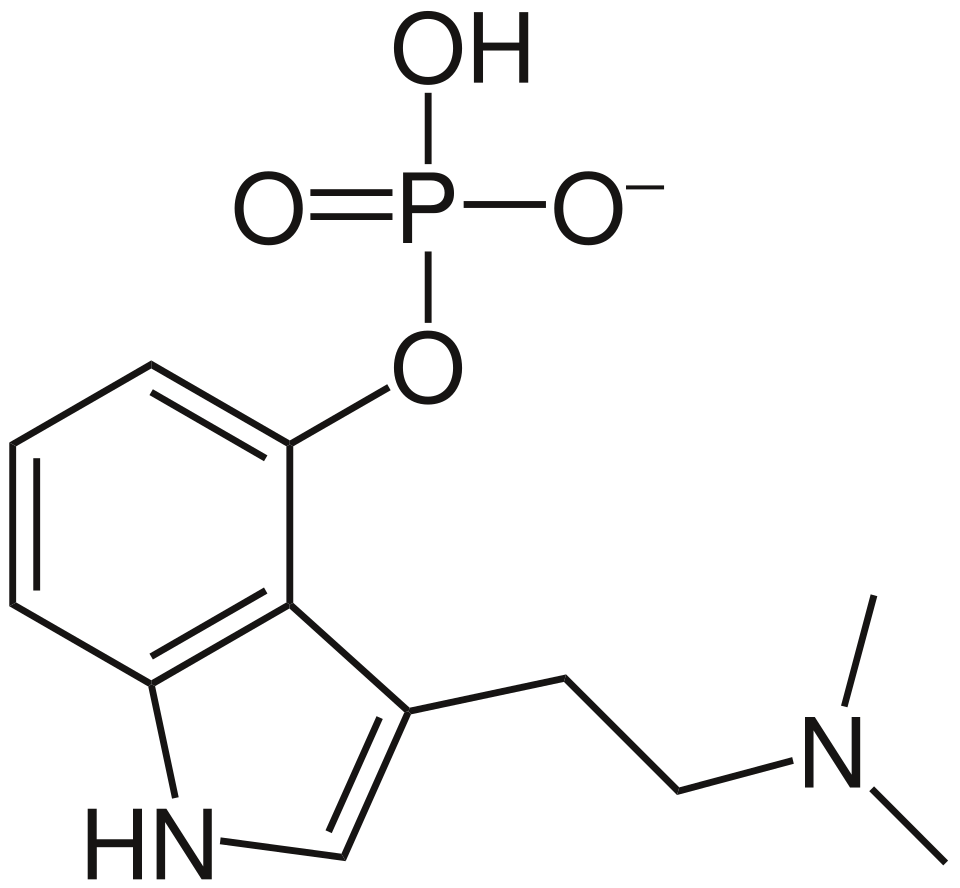
Psilocybin is converted to psilocin, which acts at serotonin receptors, particularly the 5-HT2A receptor. Its effects can include marked changes in perception, emotional experience and the sense of self. This pharmacology is different from nicotine replacement, which supplies nicotine without the toxic products of tobacco combustion.23
Several mechanisms could be relevant to dependence: a temporary change in rigid patterns of thinking, greater emotional engagement with the reasons for quitting, or an altered sense of how smoking fits into personal identity. These are plausible therapeutic processes rather than established explanations of abstinence. Evidence of altered brain connectivity or plasticity does not, by itself, demonstrate that cigarette cues have lost their behavioural influence.45
The distinction between motivation and capability is especially important. A person may leave a session strongly resolved to stop, yet still need strategies for withdrawal, access to support and a plan for moments of craving. Psychological preparation and subsequent behavioural work provide a way to translate a change in perspective into repeated, observable choices.

What the clinical findings show
The original 2014 pilot enrolled 15 smokers in an open-label programme combining psilocybin sessions with structured smoking-cessation treatment. Twelve participants, or 80%, had biochemically verified seven-day abstinence at the six-month assessment. This was an unusually strong signal, but the absence of a comparison group meant that the effects of psilocybin could not be separated from motivation, selection and intensive support.6
Follow-up of the same cohort found confirmed abstinence in 10 of the original 15 participants at 12 months. At a later assessment, averaging 30 months, nine were confirmed abstinent; 12 people attended that follow-up. These are encouraging observations of durability, but they are not an independent replication and do not establish uninterrupted abstinence throughout the intervening period.7
Among 82 participants, prolonged abstinence at six months was verified in 17 of 42 people allocated to psilocybin (40.5%) and four of 40 allocated to nicotine patches (10.0%). Both groups received cognitive behavioural treatment. Seven-day abstinence at that assessment was 52.4% and 25.0%, respectively. These are two different outcome measures.8
The trial was unblinded, and the psilocybin group had more contact time. Participants were selected, motivated smokers; most were White and many had previous psychedelic experience. The findings support further investigation, while leaving uncertainty about the contribution of expectations, additional support and generalisability. Nicotine patches were the comparator, rather than combination nicotine replacement or varenicline. No serious study-related adverse events were reported, although one episode of hypertension required clinical treatment.8
Abstinence, reduction and relapse are different outcomes
Smoking outcomes depend on how success is defined. Someone who has not smoked during the previous week may have smoked earlier in follow-up. Someone classified as having prolonged abstinence must meet a more sustained criterion, although the exact rules can allow an initial grace period or limited lapses. A study’s definition should accompany its headline percentage.
| Outcome | What it establishes | What remains uncertain |
|---|---|---|
| Seven-day point-prevalence abstinence | No smoking during the specified recent window. | Smoking outside that window and later relapse. |
| Prolonged abstinence | Abstinence across a longer period under the study’s stated rules. | Whether benefit persists after follow-up ends. |
| Reduced cigarette consumption | A change in reported or measured smoking exposure. | Whether complete cessation follows and how health risk changes. |
| Biochemical verification | Objective corroboration using a marker with a defined detection window. | Every episode of smoking between assessments. |
These distinctions are not technicalities. They determine what can reasonably be said about an intervention’s effect. A single favourable follow-up cannot establish permanent cessation, and an odds ratio should not be read as the same numerical increase in a person’s probability of quitting. Absolute numbers are usually more useful when explaining the results to patients.
Relapse should also be separated from complete loss of benefit. Returning to smoking may follow a short lapse, a period of stress or a gradual return to previous routines. The clinical response is to reassess and resume effective support, rather than treat the earlier attempt as wasted or imply that the person failed to understand the psychedelic experience.
The place of established smoking-cessation care
For eligible adults, established options include behavioural support with nicotine replacement, varenicline, cytisinicline or bupropion, selected according to suitability and preference. NICE identifies combination short- and long-acting nicotine replacement, varenicline and cytisinicline among the options more likely to support cessation when combined with behavioural help. Previous treatment should be reviewed before assuming that available care has been exhausted.9
A fair comparison asks whether psilocybin adds enough benefit to justify its additional assessment, staffing, session time and follow-up. It also asks whether a less intensive intervention could produce similar results for a particular patient. A treatment requiring a full supervised session and extensive preparation may be difficult to access even if its efficacy is ultimately confirmed.
Stopping smoking can affect the handling of some prescribed medicines. NICE advises monitoring relevant medication and adjusting treatment when necessary. This is a reason to involve the usual prescriber in a quit attempt, independently of whether psilocybin is being considered.9
Screening and safety
Long-term smoking can coexist with cardiovascular or respiratory disease, while psychedelic trials often select participants without unstable medical illness. Reassuring results in a screened group cannot automatically establish safety for someone with significant comorbidity. Psilocybin can transiently raise blood pressure and heart rate, making cardiovascular assessment relevant to this population.10
Psychiatric assessment also matters. A history suggestive of psychosis, mania, severe instability or current suicidal risk requires careful specialist evaluation. Research safeguards typically include preparation, trained support during the experience, a suitable environment and arrangements for responding to psychological or medical deterioration.11
Common acute adverse effects across psilocybin trials include headache, nausea, anxiety and transient cardiovascular changes. Adverse-event reporting has not been consistent across the field, and small trials have limited ability to detect uncommon or delayed harms. An absence of serious events in one study therefore provides narrower reassurance than a claim that treatment is universally safe.1213
Medication changes require an individual clinical plan. Combining or stopping medicines to intensify a psychedelic experience can introduce avoidable risks, including recurrence of the condition being treated. The evidence on interactions varies by drug and cannot be reduced to a single rule for all antidepressants or psychiatric medications.14
Turning a treatment experience into sustained change
Within a clinical programme, preparation should establish realistic expectations. A difficult session is not necessarily therapeutic, and a pleasant or meaningful one is not proof of future abstinence. The person should be free to describe confusion, disappointment or lack of benefit without pressure to produce a transformative account.
Afterwards, useful work remains concrete: identifying situations associated with smoking, practising alternative responses, arranging social support and reviewing what happens when cravings recur. The outcome should be assessed in daily life. Being able to get through a familiar smoking situation without a cigarette is more directly relevant to recovery than the intensity of a remembered experience.
A renewed sense of purpose may help someone persist through discomfort. It should not become a demand to rely solely on willpower. Access to appropriate cessation care remains important, and additional support may be needed when circumstances change. Continuing contact also creates an opportunity to identify delayed psychological difficulties and to revise the plan.
What still needs to be established
Larger studies need to test whether the apparent benefit is reproducible across clinical settings and more diverse populations. Comparisons should include effective contemporary cessation care, balanced contact time and clear handling of participants who cannot be reached. Follow-up should distinguish sustained abstinence from recent abstinence, record other nicotine use and include the need for further treatment.
A registered multisite trial is designed to compare psilocybin with an active placebo in tobacco use disorder. A trial registration describes intended methods; it does not establish that the intervention works.15 Questions about cost, staffing, accessibility and adverse effects will also determine whether any demonstrated benefit translates into useful routine care.
The current evidence supports psilocybin-assisted smoking cessation as a promising research direction. Its eventual clinical value will depend on durable abstinence, an acceptable safety profile and a practical place alongside treatments already available to people who want to stop smoking.
References
- National Institute on Drug Abuse. Tobacco, Nicotine, and E-Cigarettes: Research Report. Accessed 11 October 2026.
- Nichols DE. Psychedelics. Pharmacol Rev. 2016;68:264–355. doi:10.1124/pr.115.011478.
- Otto ME, van der Heijden KV, Schoones JW, et al. Clinical Pharmacokinetics of Psilocin After Psilocybin Administration: A Systematic Review and Post-Hoc Analysis. Clin Pharmacokinet. 2025;64:53-66. doi:10.1007/s40262-024-01454-4.
- Siegel JS, Subramanian S, Perry D, et al. Psilocybin desynchronizes the human brain. Nature. 2024;632:131-138. doi:10.1038/s41586-024-07624-5.
- de Vos CMH, Mason NL, Kuypers KPC. Psychedelics and Neuroplasticity: A Systematic Review Unraveling the Biological Underpinnings of Psychedelics. Front Psychiatry. 2021;12:724606. doi:10.3389/fpsyt.2021.724606.
- Johnson MW, Garcia-Romeu A, Cosimano MP, Griffiths RR. Pilot study of the 5-HT2AR agonist psilocybin in the treatment of tobacco addiction. J Psychopharmacol. 2014;28:983–992. doi:10.1177/0269881114548296.
- Johnson MW, Garcia-Romeu A, Griffiths RR. Long-term follow-up of psilocybin-facilitated smoking cessation. Am J Drug Alcohol Abuse. 2017;43:55–60. doi:10.3109/00952990.2016.1170135.
- Johnson MW, Naudé GP, Hendricks PS, Garcia-Romeu A. Psilocybin or Nicotine Patch for Smoking Cessation: A Pilot Randomized Clinical Trial. JAMA Netw Open. 2026;9:e260972. doi:10.1001/jamanetworkopen.2026.0972.
- National Institute for Health and Care Excellence. Tobacco: preventing uptake, promoting quitting and treating dependence (NG209). Treating tobacco dependence; accessed 11 October 2026.
- Nahlawi A, Ptaszek LM, Ruskin JN. Cardiovascular effects and safety of classic psychedelics. Nat Cardiovasc Res. 2025;4:131–144. doi:10.1038/s44161-025-00608-2.
- Johnson MW, Richards WA, Griffiths RR. Human Hallucinogen Research: Guidelines for Safety. J Psychopharmacol. 2008;22:603–620. doi:10.1177/0269881108093587.
- Yerubandi A, et al. Acute Adverse Effects of Therapeutic Doses of Psilocybin: A Systematic Review and Meta-Analysis. JAMA Netw Open. 2024;7:e245960. doi:10.1001/jamanetworkopen.2024.5960.
- Hinkle JT, Graziosi M, Nayak SM, Yaden DB. Adverse Events in Studies of Classic Psychedelics: A Systematic Review and Meta-Analysis. JAMA Psychiatry. 2024;81:1225–1235. doi:10.1001/jamapsychiatry.2024.2546.
- Halman A, et al. Drug–drug interactions involving classic psychedelics: A systematic review. J Psychopharmacol. 2024. doi:10.1177/02698811231211219.
- Johns Hopkins University. 5-HT2A Agonist Psilocybin in the Treatment of Tobacco Use Disorder (NCT05452772). ClinicalTrials.gov. Study registration; accessed 11 October 2026.