
As a former nurse with rather a lot of experience in cardio-electrophysiology, I cannot pretend to not despair at the frequency with which I see Heart Rate Variability (HRV) being touted by coaches and therapists. From what I understand, HRV first entered the pop-therapy domain via Callahan’s nonsensical “Thought Field Therapy (TFT)”, where an improvement in HRV was touted as the primary benefit of tapping yourself whilst chanting various phrases.
From there, all sorts of other therapies jumped on this, and dozens of apps for mobile phones appeared, all claiming to measure and improve HRV. I can tell you, this is not how HRV is measured.
Heart rate variability (HRV) is the variation in the time interval between heartbeats. It is typically measured by the variation in the beat-to-beat interval (RR interval) and is expressed in milliseconds.
HRV is influenced by the activity of the sympathetic (excitatory) and parasympathetic (inhibitory) branches of the autonomic nervous system (ANS). A high HRV is associated with a healthy cardiovascular system, while a low HRV is associated with an increased risk of cardiovascular disease. HRV can be measured noninvasively using an electrocardiogram (ECG) or a heart rate monitor and can be analysed using various methods, including time-domain, frequency-domain, and nonlinear methods.
Several conditions and factors can decrease HRV, including:
- Cardiovascular disease: Low HRV is associated with an increased risk of cardiovascular disease and can be used as a marker for the presence of disease.
- Chronic stress: Prolonged exposure to stress can lead to a decrease in HRV, as the sympathetic nervous system is activated, leading to an increase in heart rate and a decrease in HRV.
- Sleep disorders: Sleep disturbances, such as insomnia, can also lead to a decrease in HRV.
- Smoking and alcohol consumption: Both smoking and excessive alcohol consumption can decrease HRV.
- Medications: Certain medications, such as beta-blockers, can also decrease HRV.
- Ageing: HRV tends to decrease with age, and older adults tend to have lower HRV compared to younger adults.
- Obesity and sedentary lifestyle: Being overweight or obese and leading a sedentary lifestyle can decrease HRV.
Meanwhile, there are several conditions and factors that can increase HRV, including:
- Physical exercise: Regular physical activity can increase HRV by promoting the activity of the parasympathetic nervous system, which leads to a decrease in heart rate and an increase in HRV.
- Yoga and meditation: Mind-body practices such as yoga and meditation can also increase HRV by promoting the activity of the parasympathetic nervous system.
- Social support and positive emotions: Having a strong social support network and positive emotions can also increase HRV.
- Adequate sleep and good sleep quality: Adequate sleep and good sleep quality can also increase HRV by promoting the activity of the parasympathetic nervous system.
- Healthy diet: Eating a healthy diet, low in saturated fats and rich in fruits and vegetables, can help to promote HRV.
- Relaxation techniques: Relaxation techniques such as deep breathing and progressive muscle relaxation can increase HRV by promoting the activity of the parasympathetic nervous system.
- Certain medications: Some medications, such as selective serotonin reuptake inhibitors (SSRIs) and some beta-blockers, have been shown to increase HRV in some studies.
It’s worth noting that some of these factors can have different effects depending on the individual and the context and that an increase in HRV does not necessarily mean a healthy status, but it could indicate a lower risk of cardiovascular disease.
So what we see is coaches clamouring for some scientific basis for their work, and so basically, anything that improves health and well-being is likely to demonstrate an improvement in HRV. It’s just that not one of these coaches is likely to understand what it actually is, nor how it is actually measured.
If you want to see them struggle, wrench them away from a computer screen and ChatGPT, and try asking one of these coaches/therapists what the difference between a high HRV and an arrhythmia is.
Heart rate variability (HRV) is typically measured by the variation in the beat-to-beat interval (RR interval) and is expressed in milliseconds. There are several ways to measure HRV, including:
- Electrocardiogram (ECG): HRV can be measured noninvasively using an ECG, which is a test that records the electrical activity of the heart. The ECG can be done in a doctor’s office or in a hospital setting, and it is usually done while the person is lying down and relaxed.
- Heart rate monitor: HRV can also be measured using a medical heart rate monitor (not a phone app!), which is a device that can be worn on the chest, wrist, or finger. These monitors use sensors to detect the electrical activity of the heart and calculate the RR intervals.
- Photoplethysmography (PPG): Some devices use photoplethysmography (PPG), which is a non-invasive technique of measuring changes in blood volume in the microvascular bed of tissue using a light-emitting diode and a photodiode. It’s otherwise referred to as “pulse oximetry”.
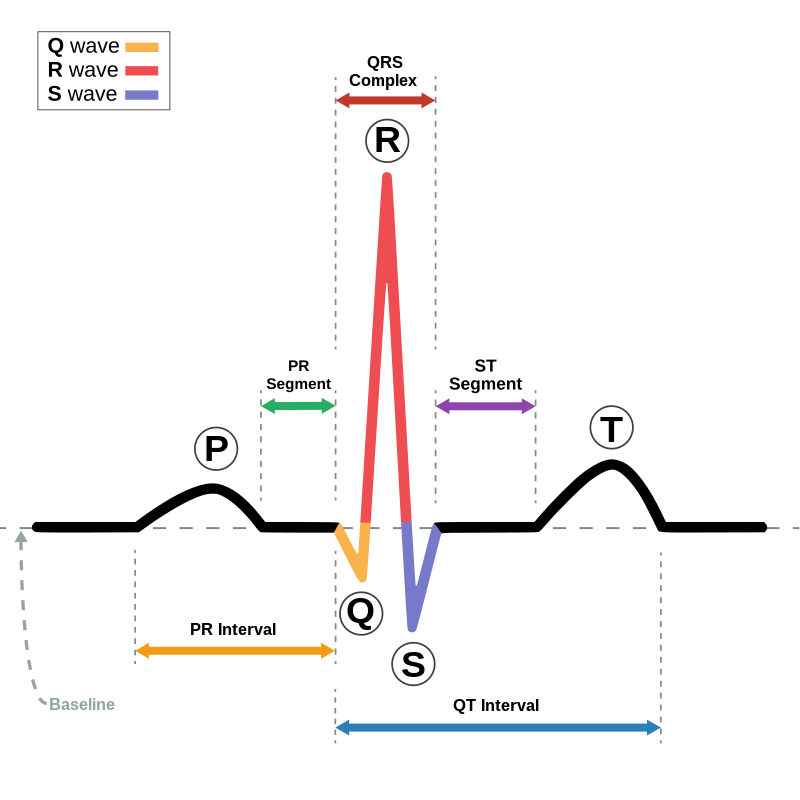
Once the RR intervals have been recorded, various methods can be used to analyse HRV, including time-domain, frequency-domain, and nonlinear methods. Here’s what the medics understand: The most common time-domain method is the standard deviation of normal RR intervals, the most common frequency-domain method is the power spectrum, and the most common nonlinear methods are the sample entropy and the Poincaré plot.
Confused? I’ll give you the stuff from the textbooks:
- Time-domain methods: These methods focus on the time intervals between successive heartbeats and use statistical measures to describe the variation in these intervals. The most common time-domain method is the standard deviation of normal RR intervals (SDNN), which is a measure of the overall HRV. Other time-domain measures include the root mean square of successive differences (RMSSD) and the percentage of differences greater than 50 ms (pNN50).
- Frequency-domain methods: These methods use mathematical techniques to analyse the variation in RR intervals over time and provide information about the different components of HRV. The most common frequency-domain method is the power spectrum, which is used to identify the low-frequency (LF) and high-frequency (HF) components of HRV. The LF component is associated with the activity of the sympathetic nervous system, while the HF component is associated with the activity of the parasympathetic nervous system.
- Nonlinear methods: This one is for brain boxes only, and I cannot pretend to understand it for one moment. These methods use complex mathematical techniques to describe the variability in the RR intervals and are based on the assumption that the underlying dynamics of the heart are nonlinear. The most common nonlinear methods are the sample entropy and the Poincaré plot. Sample entropy is a measure of the complexity of the HRV signal and is used to identify changes in the HRV pattern. The Poincaré plot is a visual representation of the HRV signal that can be used to identify different patterns of HRV.
In practice, this is what it actually looks like: a bloody expensive machine managed by healthcare professionals in a professional care/treatment unit, or a junior doctor with a fresh length of ECG ribbon printout, two rulers, a pen, and a lolly stick using the old-fashioned “stare and squint and tell everyone to fuck off because I’m trying to concentrate” method.
It’s not possible to emphasise this enough: HRV measurement requires a certain level of expertise and/or specific software, and the results can vary depending on the method used, the device and the population studied.

