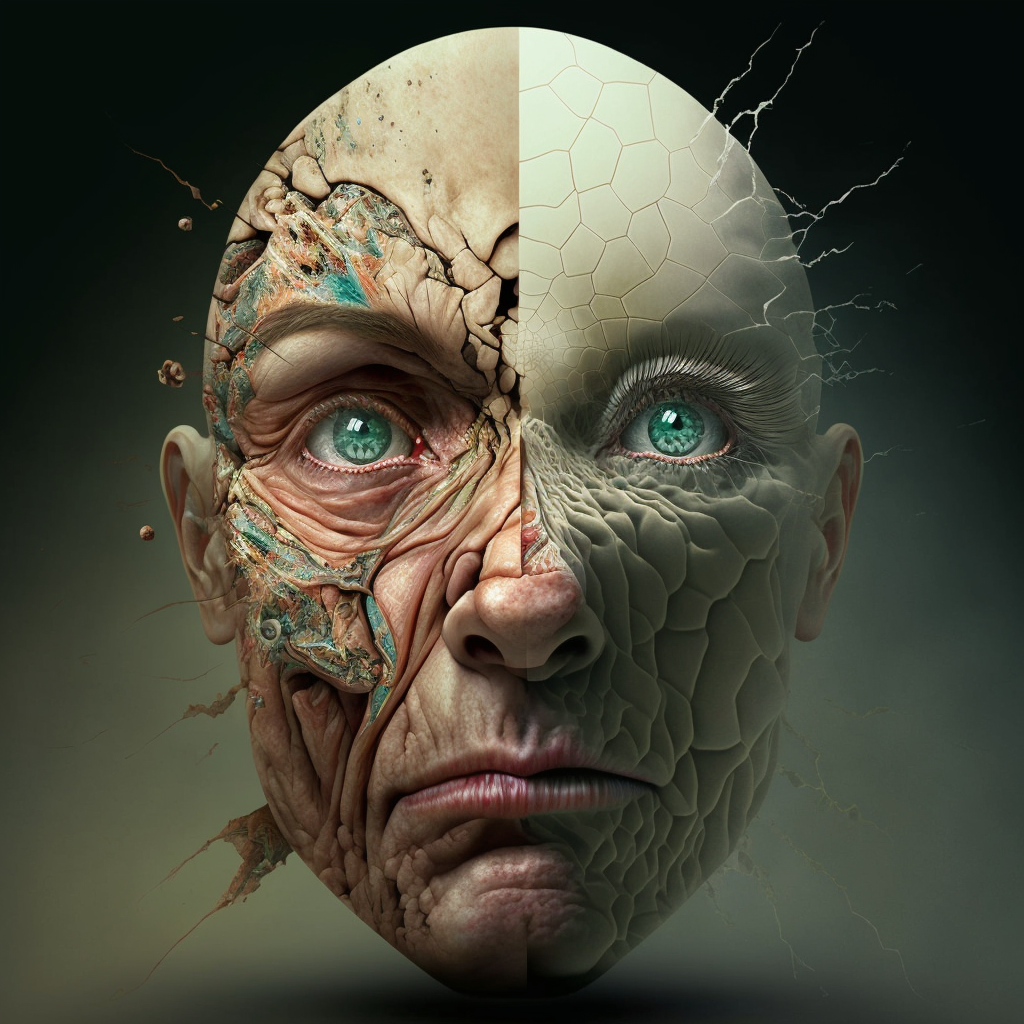
Prosopagnosia, also known as face blindness, is a neurological disorder characterised by the inability to recognise faces.
People with prosopagnosia may have difficulty recognising friends, family members, and even themselves in mirrors. They may also have trouble recognising familiar places, cars, and objects. The condition is thought to be caused by damage to the brain regions responsible for facial recognition, such as the fusiform gyrus. Prosopagnosia can be congenital (present from birth) or acquired (developed later in life as a result of brain injury or disease). It is estimated that about 2% of the population has some form of prosopagnosia.
The neurological basis of prosopagnosia is thought to be damage to the brain regions responsible for facial recognition, specifically the fusiform gyrus, which is a region in the temporal lobe. This area is believed to play a crucial role in the perception and recognition of faces. Damage to the fusiform gyrus can result in an inability to perceive and process facial features, leading to difficulty recognising faces. Other brain regions that are thought to play a role in facial recognition include the amygdala, the inferior temporal gyrus, and the superior temporal sulcus.
It is also thought that prosopagnosia is not caused by one single brain region but rather by a network of brain regions that are involved in facial recognition and processing, including the occipital face area, the superior temporal sulcus, and the middle fusiform gyrus. Damage to these regions or their connections can lead to the development of prosopagnosia.
Research suggests that some people are born with a genetic predisposition to prosopagnosia and that in others, the condition may be acquired as a result of brain injury or disease.
There have been a number of well-known cases of prosopagnosia. One well-known example is the British neuroscientist Oliver Sacks, who wrote about his experience with the condition in his book, “The Man Who Mistook His Wife for a Hat.” Another famous case is the American actor and comedian Brad Pitt, who has publicly discussed his experience with prosopagnosia.
Another example is the British neurologist Dr. Richard Russell, who has written extensively about his own experience of acquired prosopagnosia after suffering a stroke in 2005. He has described how his prosopagnosia affects his daily life, including difficulty recognising familiar people and difficulties in social interactions, and also how he uses different strategies to compensate for this condition.
There are also many other people who have been diagnosed with prosopagnosia, some of whom have shared their experiences publicly in order to raise awareness about the condition, such as
- Sarah Bate, a British artist and illustrator who has written about her experience of congenital prosopagnosia and how it affects her work.
- Ken Nakayama, a Harvard University psychologist who has studied the condition and written about his own experience with prosopagnosia.
- Jennifer Bauer-Whitney, a woman who has written about her experience of acquired prosopagnosia and how it affected her life as a teacher.
- Tracey Turner, a British woman who has written about her experience of congenital prosopagnosia and how it affects her daily life.
- The website “Face Blind”, which is a platform where people who have been diagnosed with prosopagnosia can share their experiences and get in touch with others who have similar experiences.
Website: Face Blind UK: https://www.faceblind.org.uk/

