Introduction to F.O.G. in Parenting
F.O.G., standing for Fear, Obligation, and Guilt, is a concept from Susan Forward and Donna Frazier’s book Emotional Blackmail, describing emotional tactics parents (and other authority figures) might use to influence children’s behaviour. This post explores how these tactics can manifest and their potential impacts, while acknowledging the complexity of parent–child dynamics.
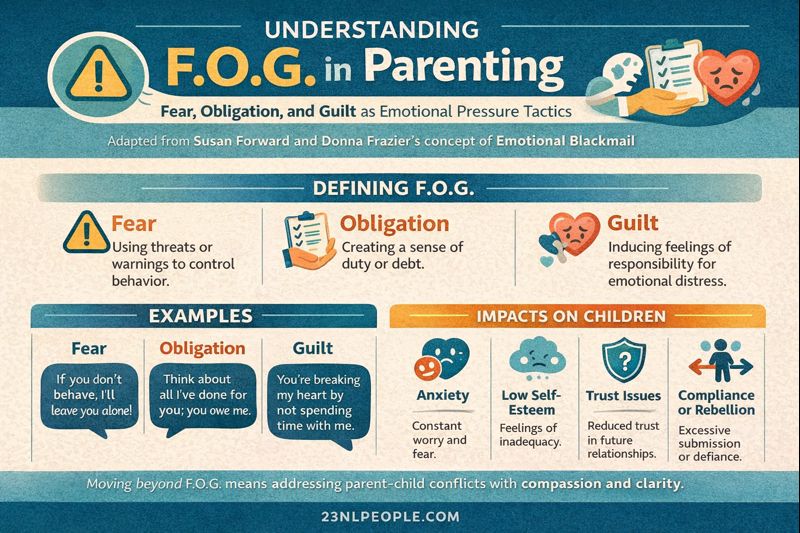
How Parents Use F.O.G.
- Fear: Parents may use fear by threatening consequences, for example: “If you don’t behave, I’ll leave you alone” to ensure compliance.
- Obligation: This involves making children feel they “owe” their parents, such as “You owe me for all I’ve done for you,” which creates a sense of duty.
- Guilt: Parents might say, “You’re breaking my heart by not spending time with me,” making children feel responsible for parental emotions.
Research (e.g., Rakow et al., 2009) suggests that guilt induction can be associated with children’s internalising problems, particularly in families where a caregiver has a history of depression.
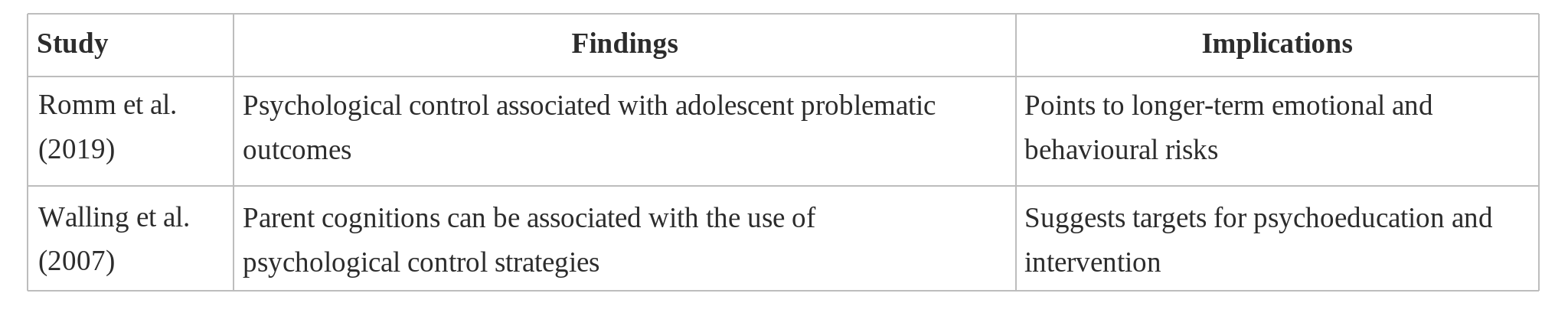
The use of F.O.G. can contribute to anxiety, depression, and low self-esteem, with children potentially developing trust issues or becoming overly compliant. A study by Romm et al. (2019) links parental psychological control to a range of adolescent difficulties, highlighting possible longer-term mental health risks.
Contexts Where F.O.G. Is More Likely to Arise
Certain environments and histories make F.O.G. more pronounced. Families coping with chronic stress, unresolved trauma, or intergenerational patterns of emotional coping may rely more heavily on internal emotion-based influence because it feels familiar or expedient.
Additionally, when a parent feels emotionally unsafe, unsupported, or overwhelmed themselves, they may unintentionally resort to fear, obligation, or guilt as a way to manage their anxiety. Awareness of these contextual factors doesn’t excuse coercive messaging, but it can guide more compassionate and targeted support or intervention.
F.O.G. works not by force, but by relocating emotional responsibility from the adult to the child.
F.O.G. tends to become particularly entrenched when:
A parent is emotionally overwhelmed or unsupported
There is unresolved trauma or loss in the family system
The child is positioned as an emotional confidant or regulator
Compliance is prioritised over emotional development
In these contexts, F.O.G. can become a primary method of emotional control rather than an occasional lapse.
Background and Definition
F.O.G. was popularised by Susan Forward and Donna Frazier in their 1997 book, Emotional Blackmail: When the People in Your Life Use Fear, Obligation and Guilt to Manipulate You. They describe it as a set of emotional manipulation tactics where individuals, including parents, use fear, obligation, and guilt to control others. This can be particularly relevant in parent–child dynamics, where power imbalances may intensify the effects of coercive or manipulative communication.
The components are commonly described as:
- Fear: Threats or intimidation to secure compliance (e.g., warnings of punishment or abandonment).
- Obligation: Creating a sense of duty so the child feels they must meet parental expectations due to “responsibility” or “what family does”.
- Guilt: Inducing responsibility for parental emotions (e.g., implying the child’s choices cause harm, disappointment, or distress).
Research Overview and Illustrative Examples
Fear: The Weapon of Intimidation
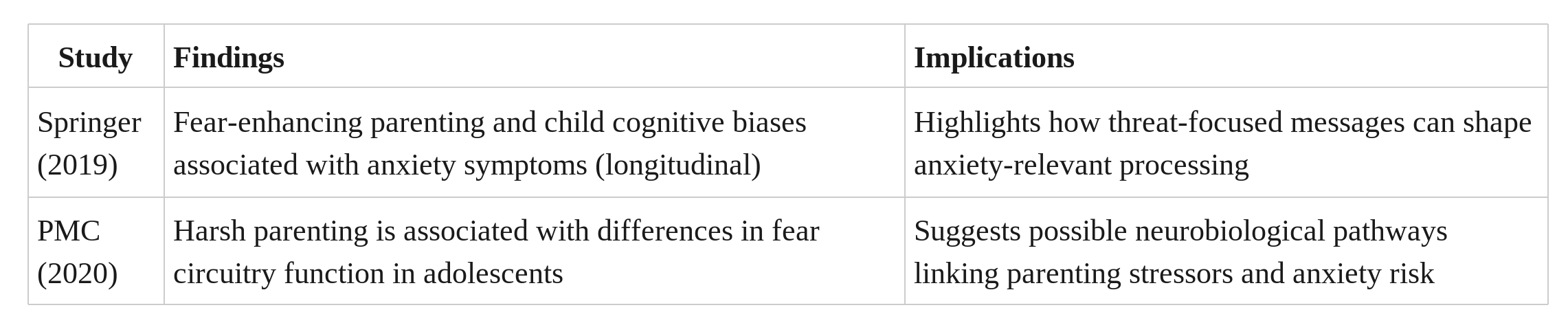
Fear-based parenting involves using threats to control behaviour, which is sometimes rooted in the parent’s anxiety about safety or outcomes.
Examples include:
- A parent forbidding playground activities, saying, “You’ll fall and get hurt.”
- Threatening, “If you don’t finish your homework, I’ll take away your video games forever,” creating immediate compliance through fear.
Obligation: The Sense of Duty
Obligation-based manipulation works by instilling a sense of duty, often framed as “family responsibility”.
Examples include:
- “You owe me for all I’ve done for you,” creating a debt narrative.
- “It’s your responsibility to take care of me in my old age,” imposing future obligations.
Guilt: The Emotional Lever
Guilt induction involves making children feel responsible for parental emotions, often through statements like “After all I’ve done for you, this is how you treat me?” or “You’re breaking my heart by not spending time with me.” This can increase compliance because the child tries to reduce guilt and restore emotional equilibrium.
Rakow et al. (2009) examined parental guilt induction and child internalising problems, particularly in families where a carer has a history of depression.

Impacts on Children
The use of F.O.G. can have profound effects, including:
- Anxiety and depression: Repeated exposure can contribute to internalising symptoms, especially in higher-risk contexts.
- Low self-esteem: Chronic manipulation can undermine confidence and self-trust.
- Trust issues: Feeling managed or coerced may reduce relational safety and openness.
- Rebellion or compliance: Some children become oppositional; others become overly compliant and struggle with assertiveness.
When F.O.G. becomes a persistent feature of parenting, its effects can extend beyond the immediate situation. Children who are repeatedly exposed to fear-based messages may become anxious or overly compliant, prioritising safety over authentic expression.
F.O.G. is particularly effective because it operates internally. Rather than relying on overt punishment, it activates the child’s own fear of loss, desire for approval, or discomfort with guilt. Once internalised, these pressures no longer require external enforcement, the child self-regulates in order to maintain emotional safety.
This is why F.O.G. can persist long after childhood, shaping adult decision-making, relationships, and self-expectations.
Persistent obligation messaging can create internalised pressure to meet others’ needs at the expense of autonomy, making it difficult to set boundaries in adulthood. Similarly, repeated guilt induction can teach children to equate caring with emotional sacrifice, which may erode self-worth and foster deep-seated worries about disappointing others.
These relational patterns can contribute to internalising symptoms like anxiety and depression and may also affect trust, assertiveness, and identity development.
Intergenerational Transmission
An important consideration is intergenerational continuity: children exposed to manipulative or coercive dynamics may adopt similar strategies later, potentially perpetuating cycles.
Children raised in emotional pressure systems often become adults who struggle to say no without guilt.
Distinguishing F.O.G. From Healthy Guidance
It’s essential to differentiate F.O.G. from firm, caring guidance. Healthy parenting involves clear expectations, consistent consequences, and emotional support without implying blame or an existential threat.
For example, telling a child “I expect you to complete your chores before gaming time” is not F.O.G. because it communicates a boundary rather than an emotional ultimatum. In contrast, saying “You’ll ruin our relationship if you don’t do your chores” shifts the conversation into emotional leverage. Recognising this distinction allows caregivers to maintain standards without creating an unnecessary emotional burden.
Conclusion and Implications
F.O.G. represents a significant challenge in some parent–child relationships, and research suggests it can be associated with adverse outcomes for children’s mental health. Parents and caregivers who recognise these patterns may benefit from shifting toward approaches grounded in empathy, boundaries, and collaborative problem-solving.
For a practical, non-academic overview, see Breaking The Cycles Of Fear-Based Parenting.
Key Citations
- Rakow et al. (2009) – Parental guilt induction and child internalising problems
- Romm et al. (2019) – Psychological control and adolescent outcomes
- 2019 longitudinal study – Fear-enhancing parenting and anxiety symptoms
- Fear circuitry and harsh parenting (PMC)
- Walling et al. (2007) – Parenting cognitions and psychological control
- McCullough et al. (2014) – Intergenerational continuity of risky parenting
