R. D. Laing’s relationship with psychoanalysis combined training, intellectual debts and sustained criticism. His books question theories that turn people into mental apparatuses, yet they also draw on psychoanalytic accounts of phantasy, defence and relationships. Understanding this combination requires separating his objections to a theoretical language from his views of what can happen between therapist and patient.
Training and intellectual debts
M. Guy Thompson reports that Laing trained at the British Psychoanalytic Institute, had Charles Rycroft as his analyst, and received supervision from D. W. Winnicott. Thompson describes Laing’s subsequent distance from the established psychoanalytic community while retaining his identity as a psychoanalyst. This is a retrospective account by someone who trained under Laing and later became his colleague. [1]
Laing’s own acknowledgement of psychoanalytic debts is explicit. In the first-edition preface reproduced in the revised Self and Others, he names Fairbairn, Melanie Klein, Bion, Winnicott, Rycroft, Erikson and Marion Milner among the influences on the book. He places these alongside analytical psychology and research on communication, person perception and family processes. His project is already broader than allegiance to a single school. [2]
This matters for reading the book’s vocabulary. Terms such as phantasy and false self belong within a continuing engagement with psychoanalytic problems. Their presence does not mean that Laing accepts every theory in which those terms appear. His explanations often shift attention towards the relations between people and the ways their experiences affect one another.
Freud and the protective uses of theory
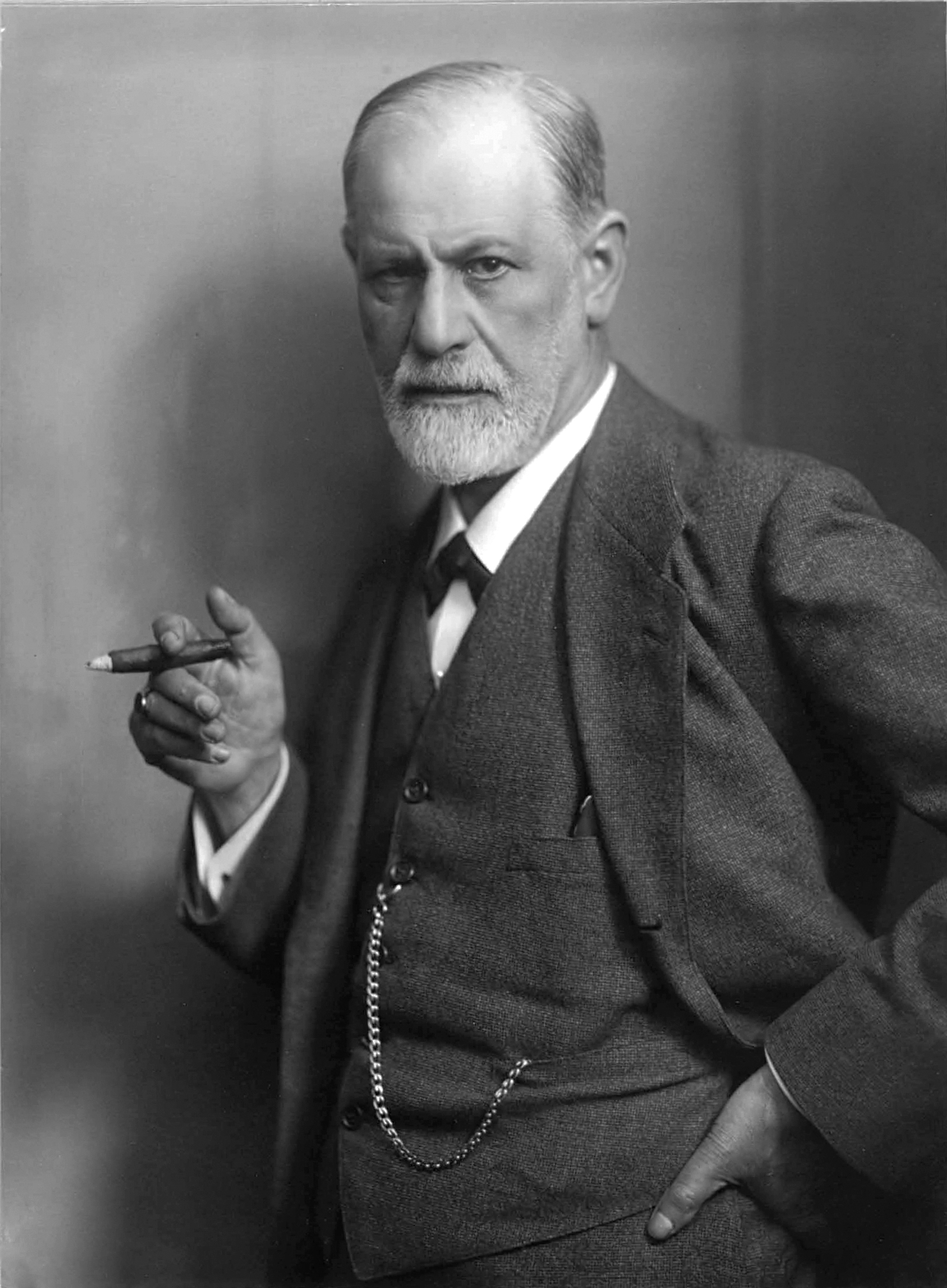
In the opening chapter of The Divided Self, Laing expresses strong admiration for Freud’s exploration of disturbing aspects of human experience. At the same time, he asks whether a theory can become a defence against the very experience it is intended to illuminate. Respect for Freud’s achievement and criticism of his conceptual framework appear together in the same discussion. [3]
Laing’s criticism of psychoanalytic theory coexists with striking admiration for Freud:
The greatest psychopathologist has been Freud. Freud was a hero.
R. D. Laing — The Divided Self, p. 25 [3]
Laing’s broader objection concerns descriptions that divide people into conceptual parts and then have difficulty expressing a relationship between persons. His discussion of ego, superego and id asks how the encounter between an “I” and a “you” can be adequately described as interaction between mental apparatuses. This is an objection to the adequacy of an explanatory model, not evidence that the phenomena psychoanalysts investigate are unreal. [3]
The methodological issue is important. A concept may help an observer identify a pattern while also directing attention away from something else. Laing wants the explanatory language to remain answerable to the person’s life and relationships, rather than allowing the model to determine in advance what can count as meaningful.

Metapsychology and the missing relationship
In The Politics of Experience, Laing returns to Freud’s metapsychology: the theoretical account of mental structures and processes behind clinical descriptions. He considers its historical role in presenting psychoanalysis as a natural scientific enterprise, but questions the price of that strategy. In his view, its vocabulary struggles to express the meeting of two people and the social systems within which their encounter occurs. [4]
His proposed change of emphasis is relational:
It is the relation between persons that is central in theory, and in practice.
R. D. Laing — The Politics of Experience, p. 42 [4]
The criticism is directed at a particular theoretical problem. Describing something as an internal object or a projection does not, on its own, explain how one person relates to another. Laing argues that experience and behaviour must both be considered, together with their relationship. An account confined to experience risks neglecting action; an account confined to behaviour risks losing what the participants experience. [4]
He also cautions against treating schools of psychotherapy as uniform. His discussion acknowledges differences within psychoanalysis, object-relations theories and existential approaches. It would therefore misrepresent his argument to turn it into a simple opposition between a single “Freudian” position and a single “Laingian” alternative. [4]
Transference and what is new in an encounter
Laing credits psychoanalysis with identifying the ways earlier relationships and habitual patterns are carried into present ones. In his account of psychotherapy, transference and counter-transference belong among the expectations and defences that can shape an encounter. He also asks how therapy can recognise what is new, rather than reading everything as repetition of the past. [4]
Interpretation is one possible means of investigating these patterns. Laing does not present it as the entire therapeutic relationship. He begins with a therapist, a patient, and a regular and reliable time and place, then asks what prevents the two people from meeting within that setting. The apparent simplicity of that question conceals difficult issues about roles, expectations, honesty and power. [4]
His discussion includes unconventional and spontaneous interventions, but also an explicit warning about their potential to be harmful without sustained concern and respect for the patient. A dramatic anecdote or departure from convention is therefore not enough to establish the quality of a clinical encounter. [4]
Phantasy remains a live problem
The revised preface to Self and Others provides another reason not to describe Laing as simply abandoning psychoanalysis. He distinguishes different uses of phantasy and considers a model of mapping: one element or set of relations can acquire the significance of another. He proposes this as a way of clarifying the distinction between phantasy as a function and its contents. [2]
The proposal remains exploratory. It does not establish that every experience is a disguised version of another, nor that the interpreter can identify a hidden meaning without evidence. Its importance here is that Laing continues to work on a recognisably psychoanalytic problem while changing the terms in which it is formulated.
What kind of evidence survives?
Thompson stresses that his account of Laing’s practice draws heavily on his own supervision and relationship with him. He also resists the idea of a standardised Laingian technique. Such testimony can illuminate one student’s experience and Laing’s teaching, but it should not be treated as an independent evaluation of clinical effectiveness or a complete record of his practice. [1]
Laing’s own texts allow a more specific conclusion: his engagement with psychoanalysis includes acknowledged debts, conceptual revision and criticism of how theory can obscure a relationship. For related discussions, see Laing’s approach to psychotherapy, Self and Others explained, and the false-self system.
Continue reading
References and source notes
- Thompson, M. Guy (2000). “The Heart of the Matter: R. D. Laing’s Enigmatic Relationship with Psychoanalysis.” Psychoanalytic Review, 87, 483–509.Cited: pp. 483–485; pp. 483–486. Online source
- Laing, R. D. (1969). Self and Others. Revised second edition. Pantheon Books.Cited: preface to the first edition, p. xi; preface to the second edition, pp. ix–x.
- Laing, R. D. (1960). The Divided Self: An Existential Study in Sanity and Madness. References use the Pelican edition, Penguin Books, 1970 reprint.Cited: chapter 1, p. 25; p. 25; chapter 1, pp. 19–20.
- Laing, R. D. (1967). The Politics of Experience and The Bird of Paradise. Penguin Books, 1970 reprint.Cited: chapter 2, pp. 41–42; p. 42; chapter 2, pp. 42–43; chapter 2, p. 41; chapter 2, p. 39; chapter 2, pp. 39–40; chapter 2, p. 40.