In the early 19th century, Parkinson’s disease was first clinically described by the English physician James Parkinson. He termed the condition “the Shaking Palsy”, based on its characteristic resting tremor.
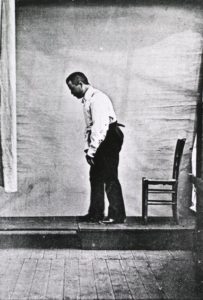
As a neurodegenerative disorder, Parkinson’s disease involves progressive deterioration of dopamine-producing neurones within the nigrostriatal pathway. Poor regulation of motor circuitry results in a range of movement abnormalities, including bradykinesia, a broad-based shuffling gait, and the characteristic fine “pill-rolling” tremor of the hands.
Levodopa, a dopamine precursor, has been the cornerstone of pharmacological treatment since the early 1960s, when dopamine deficiency was first linked to Parkinsonism and levodopa was shown to ameliorate many of the associated motor deficits.
Herbs Containing L-DOPA: An Update
Mucuna pruriens (M.P.), commonly known as velvet bean or cowitch, has been used in the treatment of spasms associated with Parkinsonism. The clinical efficacy of the seeds has been attributed to their L-DOPA content. Extracts of M.P. have demonstrated up to twice the anti-parkinsonian activity of synthetic L-DOPA in some studies.
More here: https://www.ncbi.nlm.nih.gov/pmc/articles/PMC3330839/pdf/ASL-27-50.pdf
Levodopa therapy is typically introduced in gradually increasing doses to minimise adverse effects. A significant complication of long-term levodopa use is the so-called on–off phenomenon. The “off” phase represents the end of a dose’s therapeutic efficacy and is characterised by bradykinesia, resting tremor, and muscular rigidity.
This stage is also referred to as the wearing-off phenomenon or end-of-dose deterioration. Following administration of the next dose, symptoms often resolve rapidly. This “on” phase is marked by improved motor control and may be accompanied by dyskinesia, usually within an hour of ingestion. In some patients, however, a delayed on response occurs, in which symptom relief is postponed for more than an hour.
The on–off phenomenon is a well-recognised clinical challenge in Parkinson’s disease, with the most common presentation being early-morning wearing-off. This is largely attributed to low plasma levels of levodopa during the early hours, leading to intensified akinesia.
The mechanism has been linked to early depletion of presynaptic levodopa stores, often accompanied by reduced responsiveness of postsynaptic dopamine receptors. Multiple strategies have therefore been proposed to mitigate wearing-off effects.

Dopamine processing at the synapse
Following release into the synaptic cleft, dopamine may be taken back up into the presynaptic neuron or metabolised by enzymatic pathways.
- TH: Tyrosine hydroxylase
- DOPA: L-DOPA
- DAT: Dopamine transporter
- DDC: DOPA decarboxylase
- VMAT-2: Vesicular monoamine transporter 2
- MAO: Monoamine oxidase
- COMT: Catechol-O-methyl transferase
- HVA: Homovanillic acid
One management strategy is to delay initiation of levodopa therapy or to tailor dosing to the patient’s physiological needs. Several adjunctive therapies are available, including dopamine agonists (e.g., bromocriptine), COMT inhibitors (e.g., entacapone), and MAO inhibitors (e.g., selegiline). By prolonging levodopa’s half-life, COMT and MAO inhibitors can reduce the frequency and severity of on–off fluctuations.
Despite its status as first-line treatment, levodopa can complicate long-term disease management through the on–off phenomenon. Awareness of this clinical entity is essential for neurologists when optimising therapeutic regimens for patients with Parkinson’s disease.