Medical cannabis collection · Expanded 11 October 2026
Different cannabis products can produce different effects, but a strain name is a poor substitute for knowing what is in the medicine. THC and CBD content, the amount taken, the route of administration and the individual using it are more useful starting points than a label promising “energy”, “relaxation” or “sleep”. Terpenes may also contribute, although confident claims about their clinical effects frequently run ahead of human evidence.
Evidence checked: 1 October 2026. Product examples are explanatory, not endorsements or recommendations to buy or use a particular medicine.
On this page
- Strain, cultivar and chemovar
- Does indica mean sedating and sativa mean stimulating?
- Three chemical profiles that are more informative
- Examples of named medical varieties
- What terpenes do, and what remains uncertain
- The “entourage effect” needs a precise claim
- Potency, dose and delivery are different
- A better way to compare products
- A product description that can actually be compared
- References
Strain, cultivar and chemovar
“Strain” is the familiar commercial term. “Cultivar” refers to a cultivated plant variety. A “chemovar” describes a variety by its chemical profile, while “chemotype” often denotes a broader chemical grouping. These distinctions matter because a name associated with a plant’s ancestry does not specify the amount of each active compound in a dispensed product.
A 2022 analysis of commercial cannabis from six US states found that commonly used labels did not consistently match measured chemical diversity. Some names were associated with particular profiles, but this was not a reliable universal classification. The practical implication is to ask for actual composition and batch information rather than treating the name as a prescription.
Does indica mean sedating and sativa mean stimulating?
Those descriptions are widespread, but they are not dependable medical rules. A 2021 genetic and chemical analysis found that sativa- and indica-labelled samples were not clearly distinct across the genome. Labels were associated with a smaller number of terpenes, which contribute to aroma.
This does not mean every product feels identical. It means the broad label cannot reliably tell a patient whether they will become sleepy, anxious, focused or comfortable. “Hybrid” is even less informative without chemical measurements. Someone’s previous response to a documented product can be clinically useful; an assumption based on a category is much less precise.
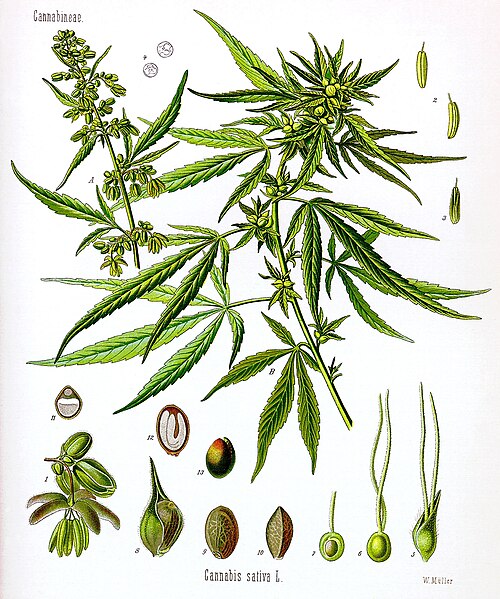
Three chemical profiles that are more informative
| Profile | What differs | Clinical interpretation |
|---|---|---|
| THC-dominant | Much more THC than CBD | Greater potential for THC-related intoxication and impairment; therapeutic usefulness still depends on the condition and dose. |
| Mixed THC and CBD | Meaningful amounts of both | The ratio and absolute amounts both matter. CBD does not guarantee protection from THC’s adverse effects. |
| CBD-dominant | Much more CBD, with little THC | Less THC exposure, but not automatically effective for pain, sleep or anxiety; CBD has its own interactions and adverse effects. |
THC produces the characteristic intoxicating effects of cannabis; CBD does not produce the same high. Nevertheless, both have biological activity. Health Canada’s consumer information describes this distinction and the variability of individual responses.
Examples of named medical varieties
The following examples show why chemical composition is more useful than a general strain category. They use specifications in the manufacturer’s 2025 product brochure. Formulations, batches and availability can change; the dispensed label and pharmacy information take priority.
| Named product and form | Published THC / CBD | What the difference tells us |
|---|---|---|
| Bedrocan, flos | 22% / less than 1% | A THC-dominant example, with substantially more THC per gram than the mixed example below. |
| Bediol, cut flos | 6.3% / 8.8% | Contains substantial quantities of both cannabinoids. |
| Bedrolite, cut flos | Less than 1% / 8.1% | A CBD-dominant example with low, rather than necessarily zero, THC. |
These differences describe ingredients, not proven rankings for IBS, insomnia or anxiety. A product can be consistently manufactured without having strong evidence for every condition for which someone might use it.
What terpenes do, and what remains uncertain
Terpenes are aromatic compounds. Commonly discussed examples include myrcene, limonene, linalool and beta-caryophyllene. A terpene profile can help describe a product, but an aroma is not a clinically validated treatment indication. Laboratory or animal findings cannot establish which flower will reliably improve a person’s sleep or pain.
There is emerging human research. A 2024 controlled experiment tested vaporised d-limonene and THC in 20 healthy adults who used cannabis intermittently. A higher limonene combination reduced certain THC-induced anxiety ratings in a subset of participants, while other effects were not changed. This supports a specific interaction under experimental conditions. It does not show that ordinary limonene-rich flower treats anxiety disorders, or that adding essential oils is safe.
The “entourage effect” needs a precise claim
The term describes the possibility that cannabis constituents modify each other’s effects. It should be treated as a set of testable interactions rather than a guarantee that a whole-plant product is superior to a purified medicine. Which compounds, at what concentrations, by which route, for which outcome? Those questions turn a marketing phrase into a scientific proposition.
CBD is a useful example of why simple rules fail. In a controlled oral study discussed by NCCIH, adding a high CBD dose to THC increased drug effects and impairment rather than reliably cancelling them. Results from one route and ratio should not be assumed to apply to another.
Potency, dose and delivery are different
A percentage tells you concentration, not how much reaches the bloodstream. As a simple illustration, a hypothetical 20% product contains twice as much THC per gram as a 10% product, but the amount used and absorption still matter. That arithmetic is not a dosing instruction. Oils expressed in milligrams per millilitre cannot be compared directly with flower percentages or a number of inhalations.
Inhaled and swallowed products also have different onset and duration. A familiar name does not make switching between them predictable. The prescriber or pharmacist should explain the exact product, its intended route and any change in formulation.
A better way to compare products
Ask about measured THC and CBD, quality controls, route, consistency and evidence relevant to the symptom being treated. Record both benefit and unwanted effects against practical goals. A lower-potency product that meets a person’s goals may be more useful than a stronger one that impairs concentration. The scientifically defensible comparison is between defined medicines and observed outcomes, not between names promising an experience.
A product description that can actually be compared
A useful comparison records the formulation, measured THC and CBD, route, dispensing instructions and treatment target. Keep that description alongside the outcome: what improved, what worsened and what changed elsewhere in treatment. The same named product may be discussed very differently by two people because their diagnoses, exposures and expectations differ.
Consistency is a quality question; effectiveness is a clinical question. A medicine can be manufactured reproducibly without evidence that it treats every advertised symptom. Conversely, an unfamiliar name need not imply poor quality. The comparison needs information that a pharmacist can check.


References
External links open in a new tab.
- Smith et al. (2022). The phytochemical diversity of commercial Cannabis in the United States.
- Nature Plants (2021). Genetic and chemical analysis of cannabis labelled as sativa and indica.
- Health Canada. Consumer information about cannabis.
- Bedrocan (2025). Corporate and product brochure, including cannabinoid specifications (PDF).
- Controlled human study (2024) of vaporised d-limonene and THC-induced anxiety.
- NCCIH. Research summary: oral THC combined with CBD can produce stronger drug effects than THC alone.
Image sources