Medical cannabis collection · Expanded 11 October 2026
Medical cannabis case studies · Literature checked 2 October 2026
One of the more striking early CBD reports described people with Parkinson’s disease whose disruptive dream-enactment appeared to improve during treatment. The story becomes more informative when the later controlled trial is included: a promising small observation did not translate into demonstrated benefit on the trial’s main outcomes. [1] [2]
Evidence at a glance: four patients in an early case series; a later 33-patient placebo-controlled trial without benefit on its primary outcomes; insufficient evidence for a guideline recommendation supporting CBD.
On this page
What is REM sleep behaviour disorder?
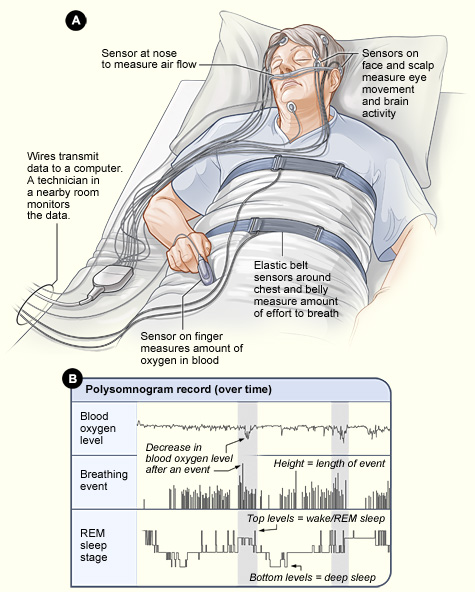
During normal REM sleep, muscle activity is strongly suppressed. In REM sleep behaviour disorder, or RBD, that protective suppression is impaired and a person may physically act out dreams. Movements can injure the sleeper or a bed partner. This is a different clinical question from difficulty falling asleep, ordinary vivid dreams or feeling unrefreshed. Assessment may involve an overnight sleep study and review of neurological conditions and medication. [3]
What happened in the original four cases?
The 2014 report described four men with Parkinson’s disease receiving CBD within a research programme. During six weeks, three reported no further disruptive episodes and one reported a reduction to about one episode per week. Symptoms returned after treatment ended. Only two had sleep-study confirmation of RBD; the other two were classified as probable cases. There was no comparable RBD placebo group, and sleep studies were not repeated during treatment to establish a physiological change. [1]
The later trial tested the idea more directly
In 2021, de Almeida and colleagues reported a randomised, double-blind trial in 33 people with Parkinson’s disease and RBD, followed for 14 weeks. CBD did not outperform placebo on the primary outcomes, which included nights with RBD and clinical global ratings. A temporary improvement in reported sleep satisfaction appeared during weeks four to eight. That secondary finding did not establish control of dream-enactment itself. [2]
The practical reading is specific: the tested CBD approach did not show superiority for the trial’s main clinical targets. It would be equally unwarranted to claim that the early case series proved effectiveness or that this modest-sized trial settled every possible cannabinoid formulation and every form of RBD.
Why a compelling case series can mislead
A before-and-after account asks whether an individual improved after treatment. A placebo-controlled trial asks an additional question: did comparable people improve more with the medicine than without it? Those are different standards of evidence. Without the comparison, ordinary variation, changed observation and expectations remain alternative explanations.
The outcome also matters. Feeling more satisfied with sleep, having fewer visible movements, avoiding injury and changing a sleep-study measurement are related but distinct achievements. A convincing treatment claim should say which was measured. It should not quietly substitute an easier or more favourable outcome for the clinical problem that prompted treatment.
That is why the later trial belongs beside the original cases. Quoting the positive paper alone would give readers an incomplete account. Equally, the original observation still has scientific value: unusual responses can identify useful questions, even when subsequent research weakens the initial hypothesis.
What clinical guidance adds
The American Academy of Sleep Medicine’s 2023 guideline judged evidence for CBD in RBD due to a medical condition insufficient and inconclusive for a recommendation. It emphasised a safe sleeping environment and made conditional recommendations for other treatments, including clonazepam and immediate-release melatonin in relevant patients. Individual choice requires clinical assessment. Protecting the sleeper and partner remains important whether or not medication is prescribed. [3]
How to use this information
Repeated dream-enactment deserves a clinical conversation, particularly when there is injury or a change in neurological symptoms. A useful description separates what the sleeper remembers from what a partner observes and records the timing, frequency and consequences of episodes. That helps identify what any proposed treatment would need to improve.
These reports concern medically administered CBD in people with Parkinson’s disease. They do not establish a benefit for every sleep complaint, a general neuroprotective effect, or an equivalent response to retail CBD products. This page is a focused appraisal of the original clinical signal and its controlled follow-up, not an exhaustive review of every cannabinoid sleep study.
This article explains published clinical evidence. Individual cases cannot predict personal treatment response. Decisions about prescription medicines belong with the treating clinician.
The value of publishing a negative result
The later trial does not erase the experiences in the original cases. It changes the level of confidence with which the treatment can be recommended. Without that follow-up, a reader could reasonably but incorrectly assume that the early report represented the settled state of the evidence.
Look for the predefined main outcome, the comparison group and the people who discontinued treatment. A favourable secondary measure can generate a new hypothesis, but should not silently replace an unsuccessful primary result. This is a useful reading habit well beyond cannabis research: the most interesting story is sometimes how a plausible claim became less certain.
References
External links open in a new tab. Journal links lead to the original report, indexed abstract or official guidance.
- Chagas MHN, et al. Cannabidiol can improve complex sleep-related behaviours… [title abbreviated; case series in Parkinson’s disease]. Journal of Clinical Pharmacy and Therapeutics. 2014;39:564–566. doi:10.1111/jcpt.12179.
- de Almeida CMO, et al. Cannabidiol for Rapid Eye Movement Sleep Behavior Disorder. Movement Disorders. 2021;36:1711–1715. doi:10.1002/mds.28577.
- Howell M, Avidan AY, Foldvary-Schaefer N, et al. Management of REM sleep behavior disorder: an American Academy of Sleep Medicine clinical practice guideline. Journal of Clinical Sleep Medicine. 2023;19:759–768. doi:10.5664/jcsm.10424.
Image sources