Frequency of Iatrogenic Deaths and Serious Harm in UK Psychiatric Practice
Abstract. Iatrogenic harm refers to injury, illness, or death caused by medical intervention itself rather than the underlying condition. In psychiatric practice, iatrogenic outcomes may arise from pharmacological treatment, inpatient containment practices (such as restraint or seclusion), electroconvulsive therapy (ECT), or failures of care, including misdiagnosis and neglect. This report synthesises available UK evidence from the past decade to estimate the frequency and nature of iatrogenic deaths and serious adverse outcomes associated with psychiatric practice. Sources include NHS datasets, coronial findings, national inquiries, peer-reviewed research, and regulatory reports. While absolute numbers are small relative to service use, the evidence indicates persistent, non-trivial levels of preventable harm warranting continued scrutiny.
1. Psychiatric Medications and Iatrogenic Harm
Psychotropic medications are among the most widely prescribed drug classes in the UK. Antidepressants, antipsychotics, mood stabilisers, and benzodiazepines are used across primary and secondary care, often for long durations. While these drugs provide benefit for many patients, they are also associated with well-documented risks that may result in serious morbidity or mortality.
1.1 Antipsychotics and Mood Stabilisers
Antipsychotic medications are associated with several potentially fatal adverse effects, including cardiac arrhythmias (particularly QT prolongation), metabolic syndrome, thromboembolic events, and neuroleptic malignant syndrome. Epidemiological studies consistently demonstrate substantially elevated all-cause mortality among individuals prescribed long-term antipsychotics, even after adjusting for baseline illness severity.
Clozapine, while clinically effective for treatment-resistant psychosis, carries distinct iatrogenic risks. These include agranulocytosis, myocarditis, and severe gastrointestinal hypomotility. UK coronial findings have identified fatal bowel obstruction and paralytic ileus in patients receiving clozapine, often in cases where physical symptoms were under-recognised or inadequately escalated within psychiatric settings.
Mood stabilisers, such as lithium, have a narrow therapeutic index. Lithium toxicity may result in renal failure, cardiac arrhythmia, or death, particularly where monitoring protocols are not rigorously followed or where drug interactions occur.
1.2 Antidepressants
Antidepressants are prescribed to millions of patients annually in the UK. Adverse effects include increased agitation, akathisia, emotional blunting, withdrawal syndromes, and cardiovascular effects. Evidence suggests that long-term antidepressant exposure is associated with increased risks of cardiovascular disease, stroke, and sudden cardiac death.
While causality is complex, antidepressants have also been associated with increased suicidal ideation and behavioural activation, particularly during initiation or dose changes. Suicide remains the most common cause of unnatural death among individuals under mental health care, and medication-related exacerbation of risk is a recognised contributing factor in a subset of cases.
1.3 Benzodiazepines and Sedative Medication
Benzodiazepines and related sedatives pose risks of dependency, cognitive impairment, falls, and respiratory depression. While rarely fatal in isolation, these drugs substantially increase mortality risk when combined with opioids or alcohol. Drug-related death statistics in the UK consistently identify benzodiazepines as contributing agents in a significant proportion of poisoning fatalities.
Chronic benzodiazepine use is also associated with indirect harms, including accidents, functional decline, and severe withdrawal syndromes, which may precipitate hospitalisation or self-harm.
2. Hospital-Based Psychiatric Interventions
2.1 Physical Restraint
Physical restraint is used within psychiatric inpatient settings to manage acute risk. However, it carries inherent dangers, particularly when involving prone positioning, prolonged struggle, or multiple staff applying force. Documented mechanisms of death include positional asphyxia, cardiac arrest, and rhabdomyolysis.
National data indicate that restraint-related deaths, while infrequent, occur with disturbing regularity. Reviews of deaths in mental health settings have identified a small but consistent number of fatalities occurring during or shortly after restraint each year. High-profile cases have demonstrated systemic failures, including inadequate training, poor inter-agency communication, and delayed medical response.
Non-fatal harms associated with restraint include fractures, hypoxic brain injury, renal failure, and psychological trauma.
2.2 Seclusion and Segregation
Deaths directly attributable to seclusion are rare, but serious harm may arise through neglect, insufficient observation, or delayed recognition of medical emergencies. Case reports document fatalities due to unnoticed respiratory compromise or self-harm in inadequately monitored seclusion environments.
More commonly, seclusion contributes to serious non-fatal harm through dehydration, untreated injury, and exacerbation of psychiatric distress. Regulatory guidance emphasises minimising seclusion duration and maintaining continuous clinical oversight.
2.3 Electroconvulsive Therapy (ECT)
ECT is a medical procedure involving general anaesthesia and induced seizure. Contemporary UK data indicate a very low mortality rate, comparable to minor surgical procedures. Estimated mortality is approximately two deaths per 100,000 treatments.
Serious adverse medical events, including cardiac arrhythmias and prolonged seizures, occur infrequently and are usually managed without lasting injury. Cognitive side effects, particularly memory impairment, are common and occasionally persistent. While ECT-related deaths are rare, its risk profile warrants continued surveillance and informed-consent processes.
3. Negligence, Misdiagnosis, and Systemic Failures
A substantial proportion of iatrogenic harm in psychiatric practice arises not from specific treatments but from failures of care. These include diagnostic overshadowing, inadequate physical health assessment, poor risk management, and failure to respond to deterioration.
Multiple UK inquiries have identified widespread shortcomings in the investigation of deaths among mental health service users. Reviews have documented large numbers of unexpected deaths that were either inadequately investigated or not investigated at all. Common themes include failures to recognise physical illness, inadequate suicide risk assessment, poor communication with families, and insufficient escalation of concerns.
Ongoing independent inquiries into historic deaths within mental health services continue to uncover patterns of preventable harm spanning many years. Litigation data further supports the existence of systemic issues, with hundreds of negligence claims settled against mental health trusts, often involving fatal or catastrophic outcomes.
4. Estimated Frequency of Iatrogenic Deaths and Serious Harm
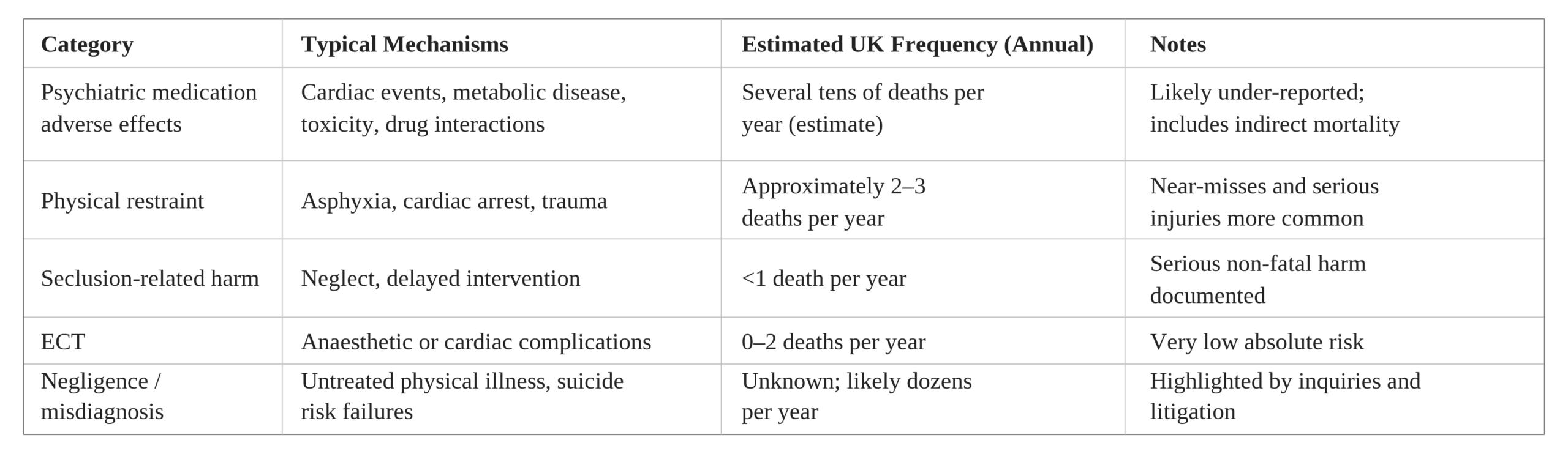
Across the past decade, UK psychiatric practice has been associated with a persistent level of iatrogenic death and serious harm. Although such events are uncommon relative to the scale of service provision, they are neither rare nor random. Evidence indicates recurring patterns involving medication toxicity, physical containment practices, and systemic failures in care delivery.
When averaged annually, the data suggest that several dozen deaths per year may plausibly involve iatrogenic contribution from psychiatric practice, alongside hundreds of cases of serious non-fatal harm. Many of these outcomes appear preventable through improved monitoring, safer prescribing, robust integration of physical health, and stricter governance of coercive practices.
Ongoing national scrutiny, transparent reporting, and independent investigation remain essential to reducing future harm. The ethical obligation of psychiatric services extends beyond treatment efficacy to the minimisation of avoidable risk, particularly for populations already subject to heightened vulnerability.